Guide
The Free 21-Point Inspection, Point by Point
Published September 30, 2026
The inspection is free, takes about twenty minutes, and covers twenty-one specific points across six groups: springs, cables and drums, hardware, track, the door itself, and the opener and its safety systems. You get the written findings at the end whether or not anything needs fixing — including the parts that are fine. This guide walks through what each group is actually looking for, so you know what was checked and why it matters.
Why publish the list at all
Most free inspections in this trade are a sales call with a clipboard. The technician looks at the door, finds a problem, and quotes a repair. Nothing is written down, and you have no way of knowing what was actually examined.
Publishing the whole list changes what the visit is. If you can read the twenty-one points before we arrive, you can ask about any of them, and you can check that the written findings you receive actually cover them. It also means we have to tell you what is fine, not only what is broken — which is the part that makes the report worth having.
The groups below follow the order the inspection is actually done in, which runs from the parts under the most tension to the parts under the least.
Springs, cables and drums — the parts under load
Three points cover the springs: the type and size fitted, their condition along the full length of the coil, and whether they are correctly balanced for the weight of the door. A door that is out of balance will not sit still halfway up — and that single test tells you more about the spring system than looking at the springs does.
Three more cover the cables and drums. Lift cables are checked along their whole run for fraying, corrosion and flattening, the drums for wear on the grooves, and both sides for even winding. Cables and drums work as a pair: a drum that is worn will chew through a new cable, so replacing one without inspecting the other is a repeat visit waiting to happen.
These six points are also the ones that are genuinely not DIY. Everything in this group is either under full spring tension or holds the door up because of it.
Hardware, track and the door — the parts that wear
Six points cover hardware: hinges, rollers, bearings, the bottom brackets, the fasteners holding it all together, and the shaft the springs sit on. This is the largest group because it is where most of the moving parts are, and where the majority of noise complaints originate.
Three points cover the track — alignment, mounting and condition. Track problems rarely announce themselves. A door that binds slightly on the way up is the opener working harder than it should, and that shows up later as a burned-out opener rather than as a track complaint.
Two points cover the door itself: the sections and panels, and the weather seal at the bottom. On a Cincinnati door the bottom section and its seal do the hardest work, because that is the zone that sits in salt, meltwater and road spray all winter.
Opener and safety — the four that are not optional
The last four points are the opener and its safety systems, and they are the ones we will not skip regardless of what you called us out for.
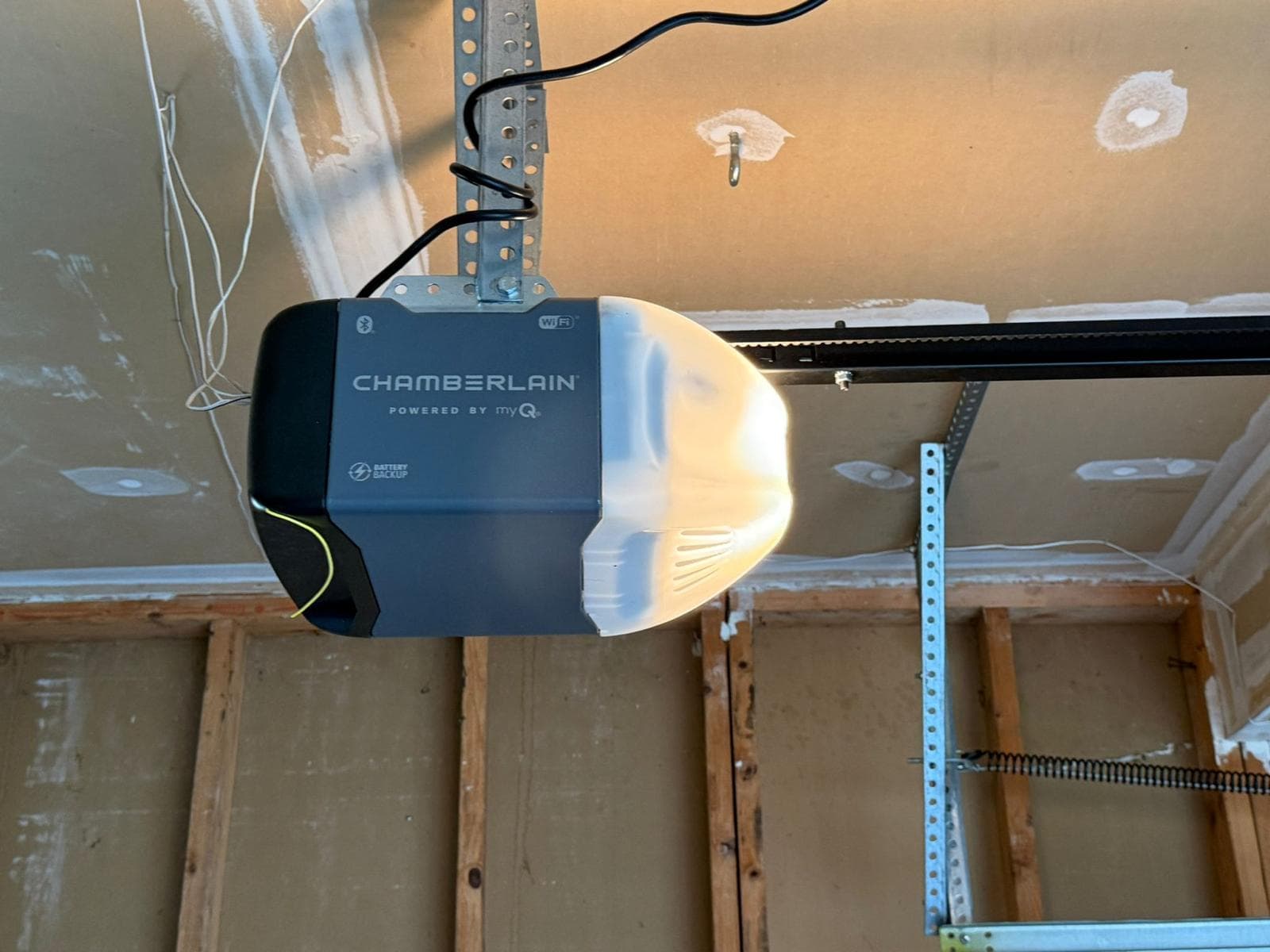
First, the opener unit and drive — its condition and how hard it is working. Second, the force settings. Up-force and down-force set too high and the door will not reverse properly on an obstruction; set too low and it stops for no reason. Third, the photo-eye sensors: both lit steadily, mounted no higher than six inches from the floor, wiring intact. Mounting them higher defeats their purpose.
Fourth, a live safety reversal test. A solid obstruction goes in the door's path, the door closes, and it must contact the obstruction and reverse. We run this in front of you before we leave, because it is the only one of the twenty-one points that proves itself rather than being reported.
What you get at the end
Written findings covering all twenty-one points, including the ones that passed. There is no charge for the visit or the inspection, and no obligation to book any work that comes out of it.
If something does need fixing, you get told what, why, and what happens if it waits — and the honest answer is sometimes that it can wait. A worn roller is a different conversation from a corroded bottom bracket, and the report should make that difference clear rather than flattening everything into one quote.
Warning signs before a full break
- The door will not stay put when stopped halfway — a balance problem
- Grinding or scraping that changes as the door moves
- Visible fraying or kinking anywhere along a lift cable
- Gaps between the bottom seal and the floor when the door is closed
- The door binds or slows at the same point in its travel every time
- Sensor lights that are off, flickering, or mounted above knee height
- The door contacts an obstruction and does not reverse
Frequently asked
Is the inspection genuinely free, or is it free if I book work?
Genuinely free, and not conditional on booking anything. The visit costs nothing, the inspection costs nothing, and you keep the written findings either way. If nothing needs doing, we tell you that and leave.
How long does it take?
About twenty minutes for the twenty-one points on a standard residential door. A three-car garage with two separate door systems takes longer, because each door is its own inspection.
Do I need to be home for it?
Yes, and specifically for the end of it — the safety reversal test is run in front of you. The rest can happen while you get on with something else, but that last point is worth watching.
Will you find something wrong on purpose?
The written findings cover all twenty-one points, including the ones that are fine, which is exactly the thing that makes inventing a problem difficult. A report that lists nineteen passes and two genuine issues is a more useful document than a quote, and it is what you should expect.
Can I get the inspection on a door you did not install?
Yes. Most of the doors we inspect were installed by somebody else, often years ago. The inspection is about the current condition of the system, not about who fitted it.
Related service
If this is happening to your door right now
Get the free inspection before it becomes an emergency
The 21-point inspection checks spring condition and remaining life along with the hardware around it, and you get the written findings — no charge, no obligation. We're open 24 hours across Greater Cincinnati and Northern Kentucky.
Written by the PowerLift Garage Door team, based on repairs made across Greater Cincinnati and Northern Kentucky. About us