
Open 24 hours · emergency service
Garage Door Spring Repair in Cincinnati
A broken garage door spring is the most common garage door failure in Cincinnati, and it is a same-day repair. We replace torsion and extension springs anywhere in the Greater Cincinnati and Northern Kentucky area, 24 hours a day, and every visit includes a free 21-point safety inspection with a written report. Springs are the one garage door repair we tell homeowners never to attempt themselves.
If your door will not lift, the opener strains and stops, or you heard a bang like a gunshot from the garage, you almost certainly have a broken spring. The springs — not the opener — carry the weight of the door. A double steel door runs 150 to 200 pounds, and the opener is only strong enough to guide that weight once the springs have balanced it.
You can usually confirm it in ten seconds without touching anything. Look at the bar above the door opening. If you see a coiled spring with a visible two-inch gap in the middle of the coil, that spring has snapped.
Free 21-point garage door safety inspection
We check all 21 points, hand you the written findings, and tell you what does not need fixing. There is no charge and no obligation to book work.
Signs to look for
How do I know this is the problem?
- A loud bang from the garage, often mistaken for a gunshot or something falling
- The door will not open, or lifts a few inches and stops
- The opener strains, hums, then reverses or clicks off
- A visible two-inch gap in the coiled spring above the door
- The door feels extremely heavy if you try to lift it by hand
- The door slams down fast instead of lowering under control
- One side of the door rises higher than the other
What happens
What we actually do
- 1
We secure the door before anything else
A door with a broken spring is unbalanced and can drop. We clamp the tracks and disconnect the opener before any work starts.
- 2
We measure the spring rather than guess
Wire size, inside diameter and overall length determine the correct replacement. A spring that is close but not right will fail early and can damage the opener.
- 3
We recommend replacing both springs on a two-spring door
The springs are the same age and have taken the same number of cycles. If one has reached the end of its life, the other is close behind, and a second call-out costs more than the second spring.
- 4
We wind to the correct tension and balance the door
A correctly balanced door will stay put when you lift it halfway and let go. If it drifts up or drops, the tension is wrong and the opener will wear out early.
- 5
We run the free 21-point safety inspection
Cables, rollers, hinges, bearings, brackets, track alignment, opener force settings and the photo-eye reversal test. You get the written findings, including the parts that are fine.
Cost
What drives the price of a spring replacement
Four things: whether the door uses torsion springs (mounted on a bar above the opening) or extension springs (running alongside the tracks); whether it is a single or double door; the cycle rating you choose; and whether the hardware around the spring — cable drums, bearing plates, the center bracket — has been damaged by the break. We give you the number before we start, and the safety inspection that tells us which of those apply is free.
Free 21-point garage door safety inspection
From our jobs
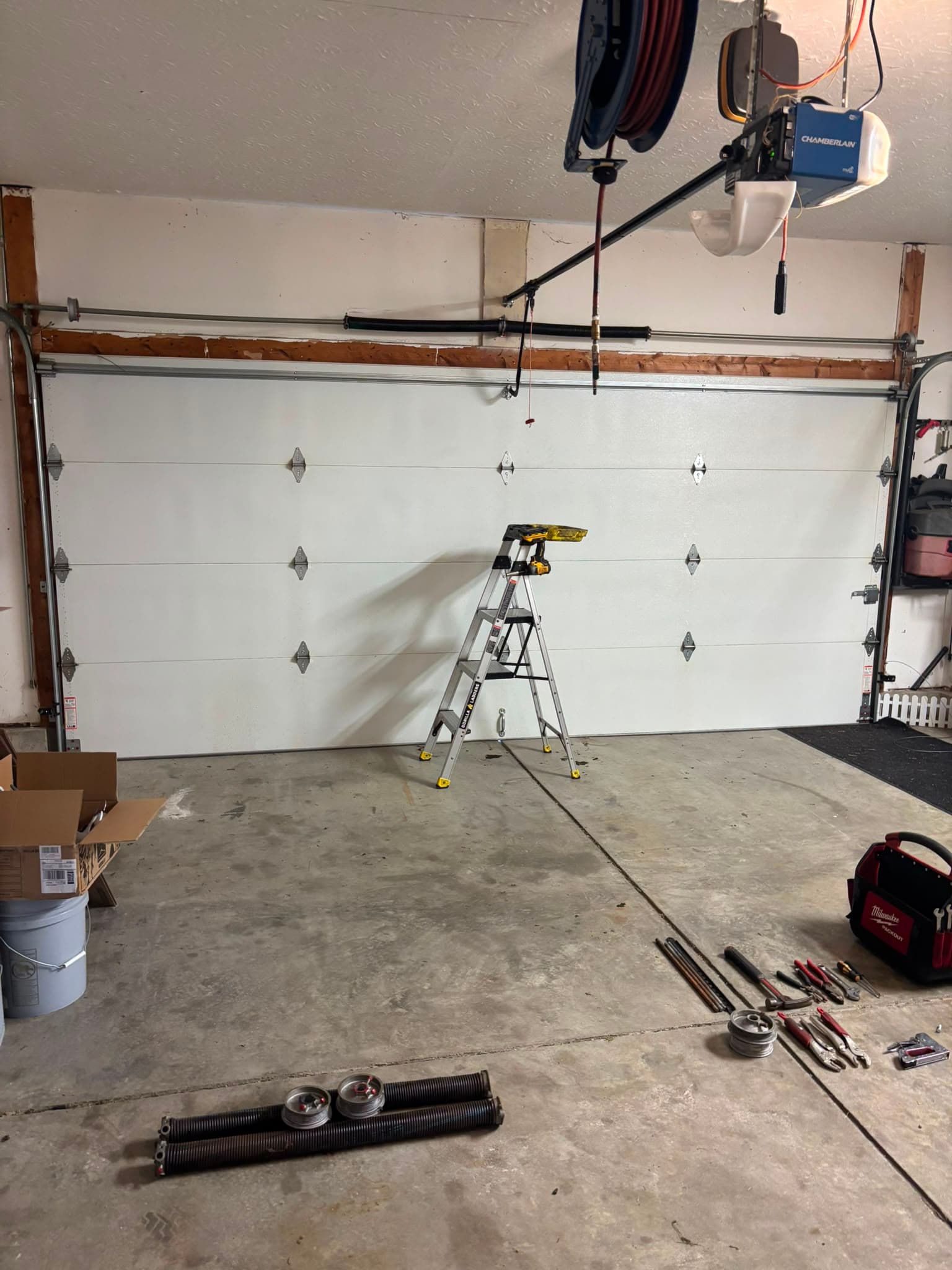
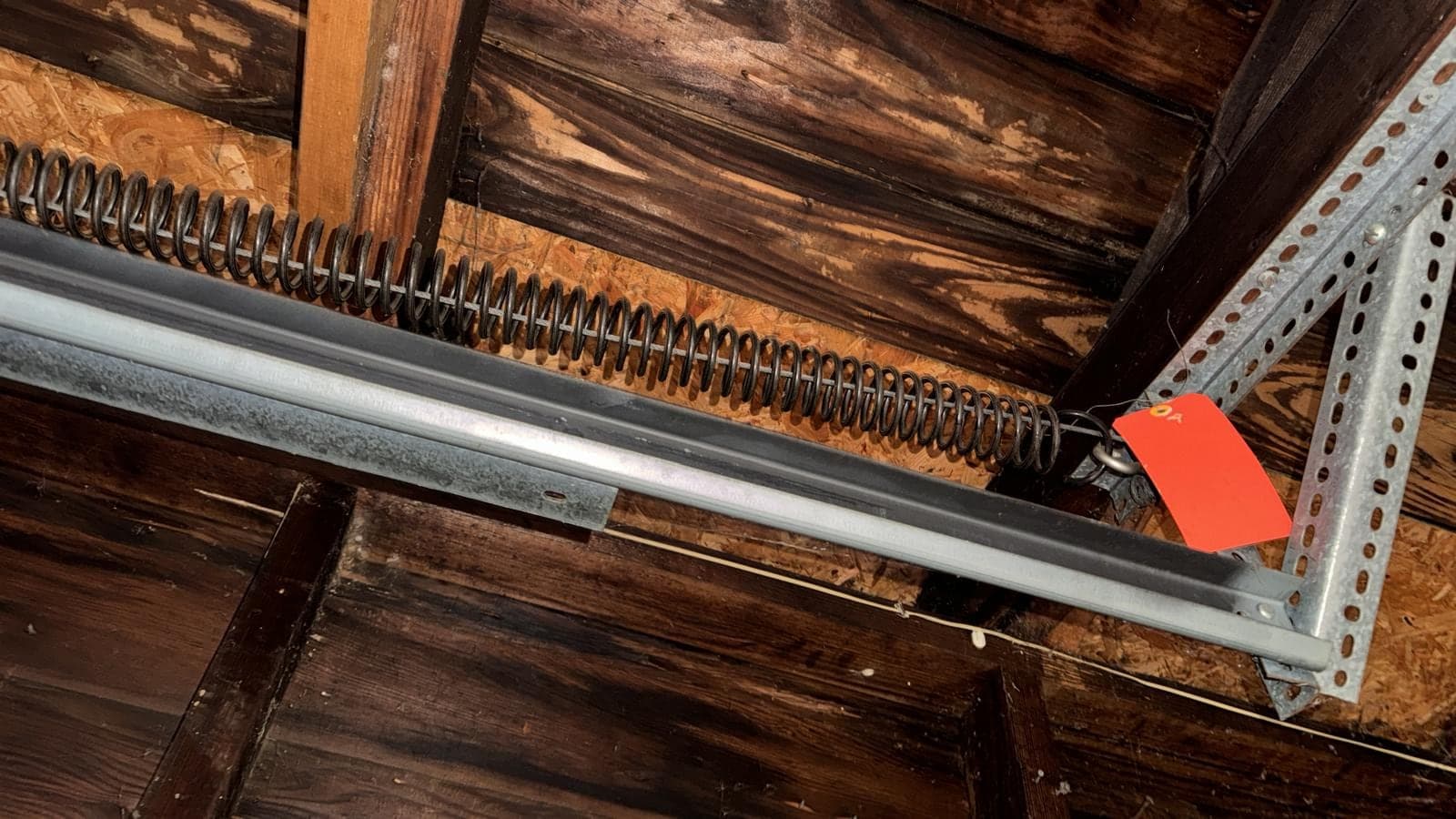
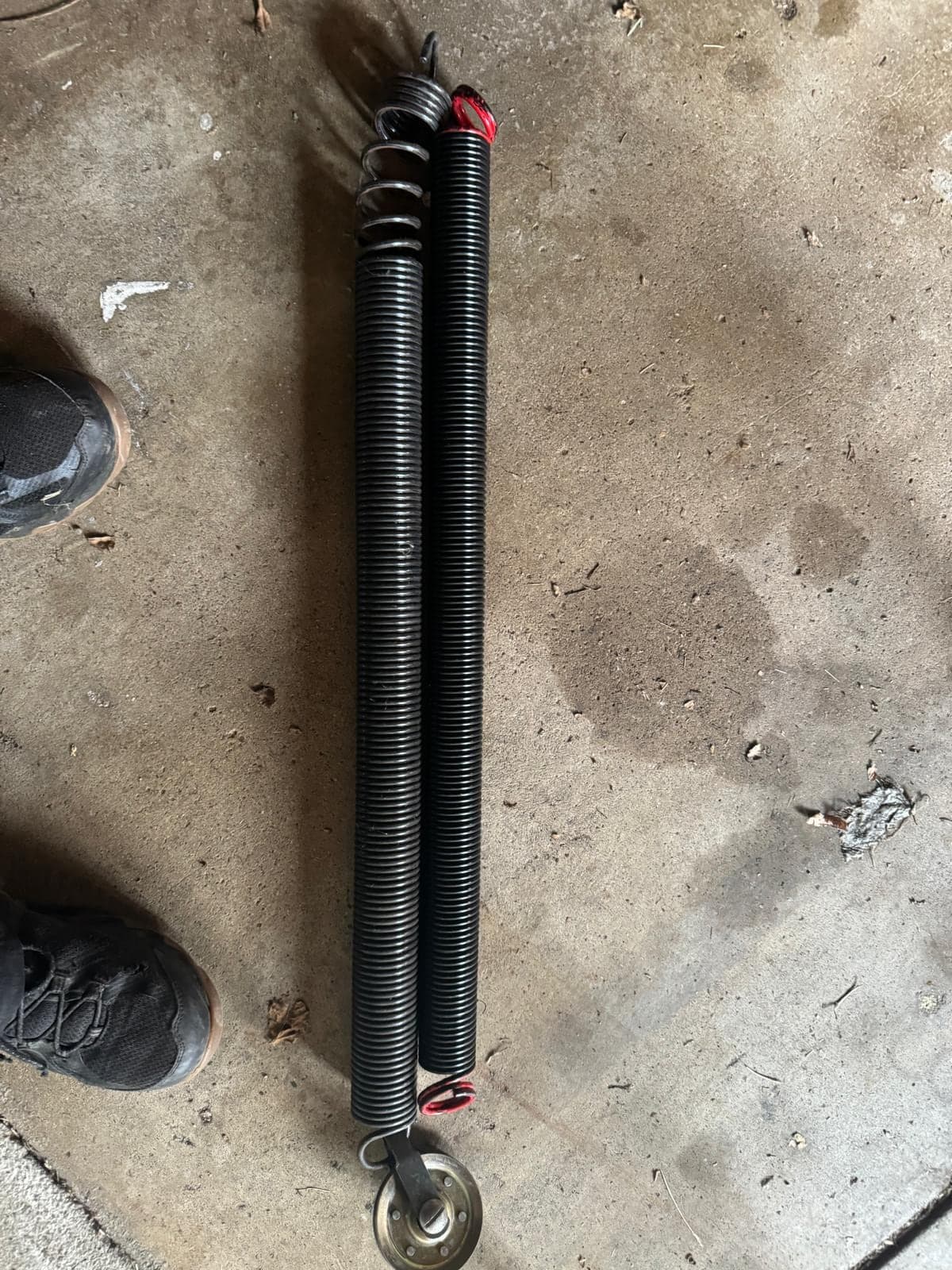
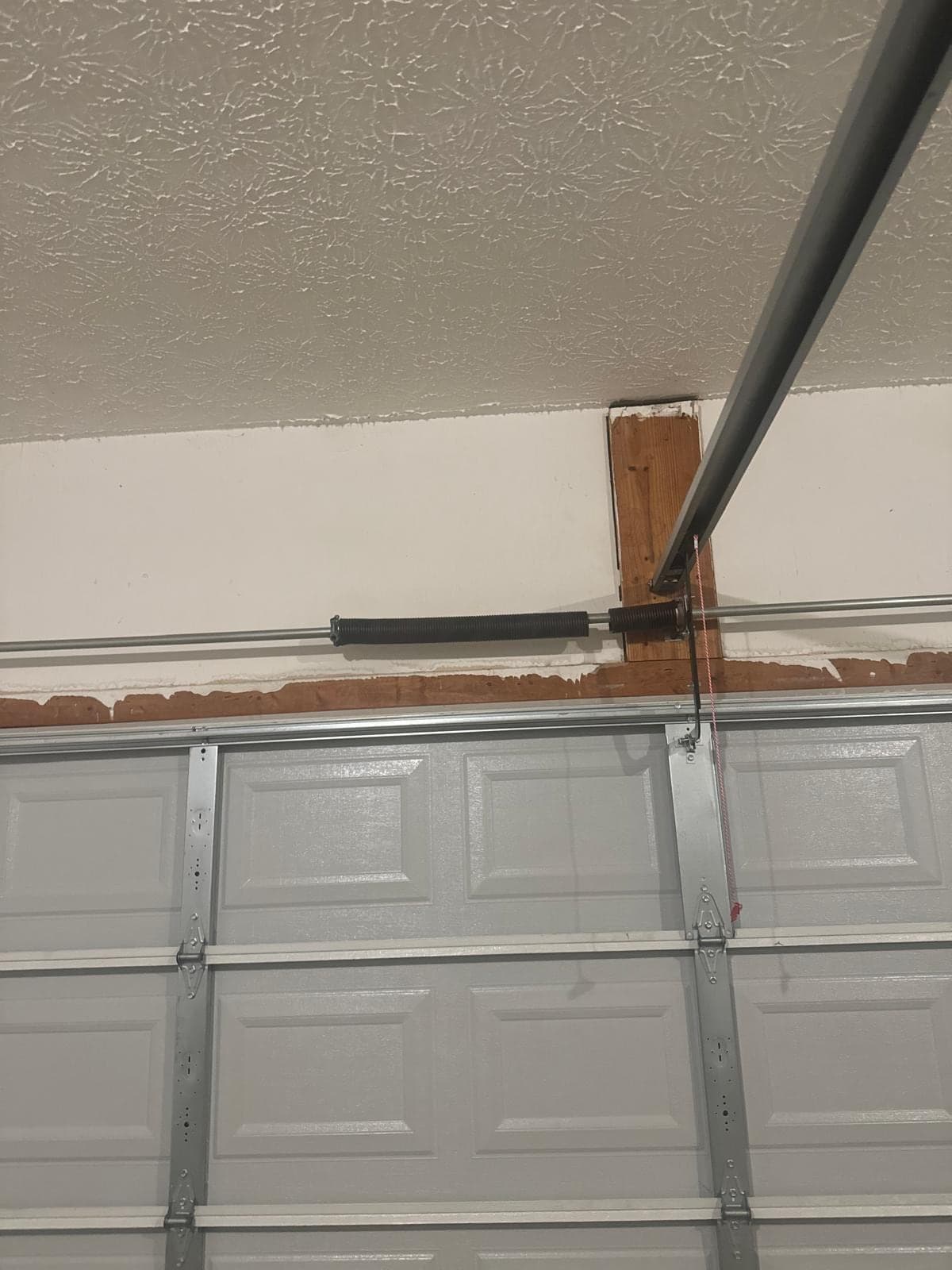
Spring repair photos from real visits
Phone-camera photos from PowerLift jobs around Greater Cincinnati and Northern Kentucky. Nothing staged, nothing borrowed.
Worth knowing
Why this matters
A standard torsion spring is rated for about 10,000 cycles, where a cycle is one open plus one close. A household opening the door four times a day gets there in roughly seven years. That is why springs so often break at a predictable age, and why a high-cycle spring rated 25,000 cycles or more is worth considering on a door that gets heavy daily use.
Questions
Spring repair questions we get asked
Can I replace a garage door spring myself?
This is the one repair we genuinely advise against. A torsion spring under tension stores a large amount of energy and releases it in a fraction of a second if a winding bar slips. Most other garage door work — replacing a roller, tightening hinges, realigning a photo-eye sensor — is reasonable DIY. Spring replacement is not, and emergency rooms see the results every winter.
Should I replace one spring or both?
On a two-spring door, replace both. They were installed at the same time and have taken the same number of cycles, so when one breaks the other is typically within months of the same fate. Paying for a second service call shortly afterwards costs more than the second spring does now.
How long does a spring replacement take?
Most residential spring replacements take under an hour once we are on site, including balancing the door and running the safety inspection. Doors with unusual hardware, a damaged center bearing plate, or a converted extension-to-torsion setup take longer.
What is the difference between torsion and extension springs?
Torsion springs mount on a steel shaft above the door opening and twist as the door moves. Extension springs run along the horizontal tracks on either side and stretch. Torsion is more common on newer and heavier doors, lasts longer and fails more predictably. Extension springs are common on older detached garages around Cincinnati and Northern Kentucky, and they should always have containment cables running through them so a break cannot send the spring across the garage.
Can I still open the door with a broken spring?
You should not. Without the spring, you are lifting the full 150 to 400 pounds of the door yourself, and the opener is not built to do it — forcing it is how a broken spring turns into a burned-out opener as well. If you need the car out, call us; we run 24 hours.
How long should new springs last?
A standard spring is rated for about 10,000 cycles, which is roughly seven years at four cycles a day. If the door is the household's main entrance and opens eight or ten times a day, a standard spring may only last three to four years, and a high-cycle spring is usually the better value.
Why do springs seem to break in winter?
Steel contracts in cold and becomes slightly less forgiving, so a spring already near the end of its cycle life tends to give up on the first genuinely cold morning. The cold does not cause the failure; it reveals a spring that was already close.
Where
Spring repair across the Cincinnati metro
Need spring repair in Cincinnati?
We are open 24 hours across Greater Cincinnati and Northern Kentucky. Call (513) 276-2503 and the free 21-point safety inspection costs nothing.