Garage Door Opener Repair in Cincinnati
Most garage door opener problems are one of four things: misaligned photo-eye sensors, a dead remote or keypad battery, a stripped drive gear, or force and travel limits that have drifted out of adjustment. All four are repairs rather than replacements. We service Chamberlain, LiftMaster, Genie, Craftsman, Linear and Overhead Door units across Greater Cincinnati, and the diagnostic inspection is free.
Before you call anyone, there is one check worth doing. Pull the red release cord and lift the door by hand. If the door is heavy, binds, or will not stay put when you let go at waist height, the problem is the door, not the opener — and replacing the opener will not fix it. If the door glides and stays where you leave it, the opener is the culprit.
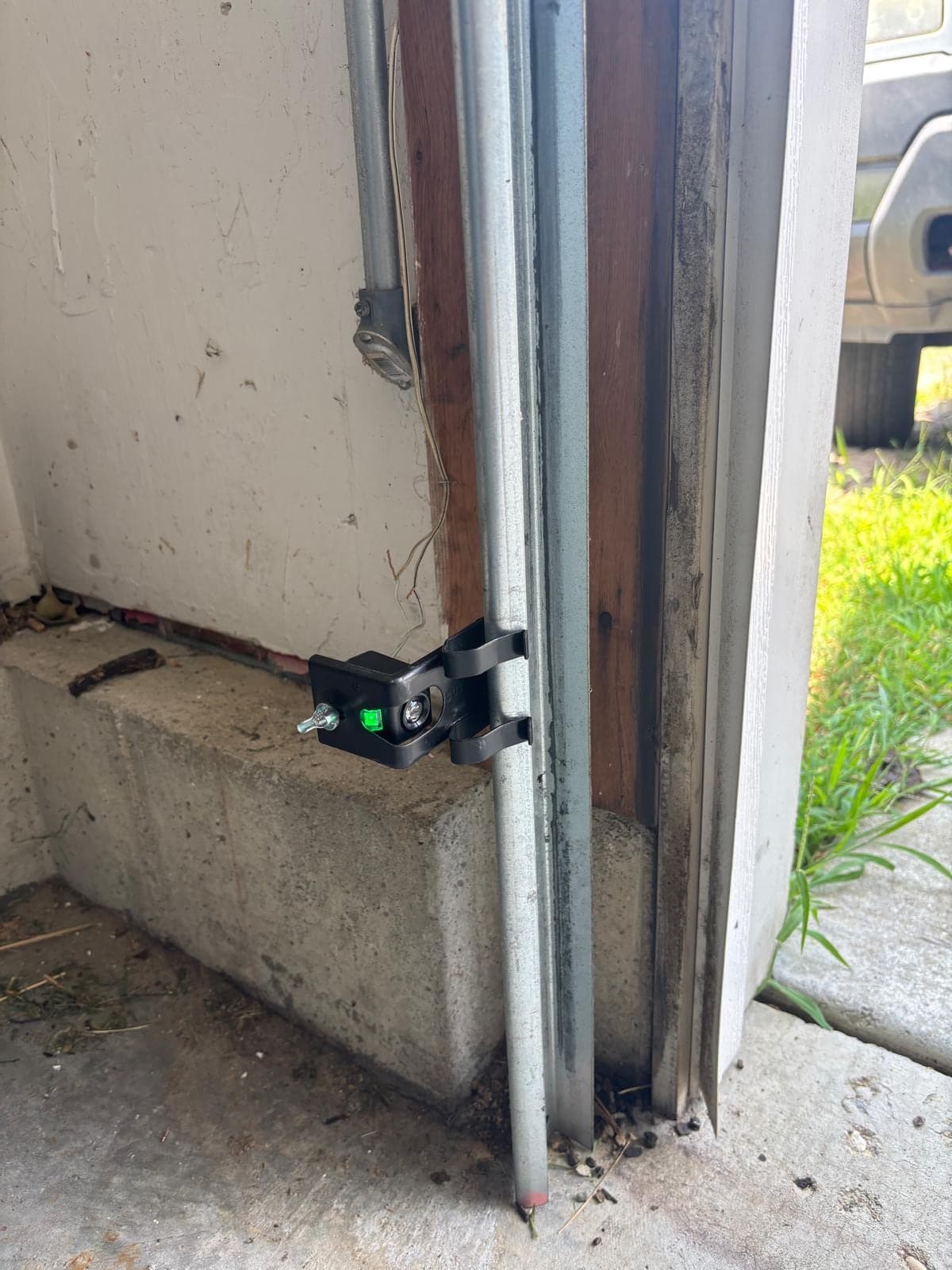
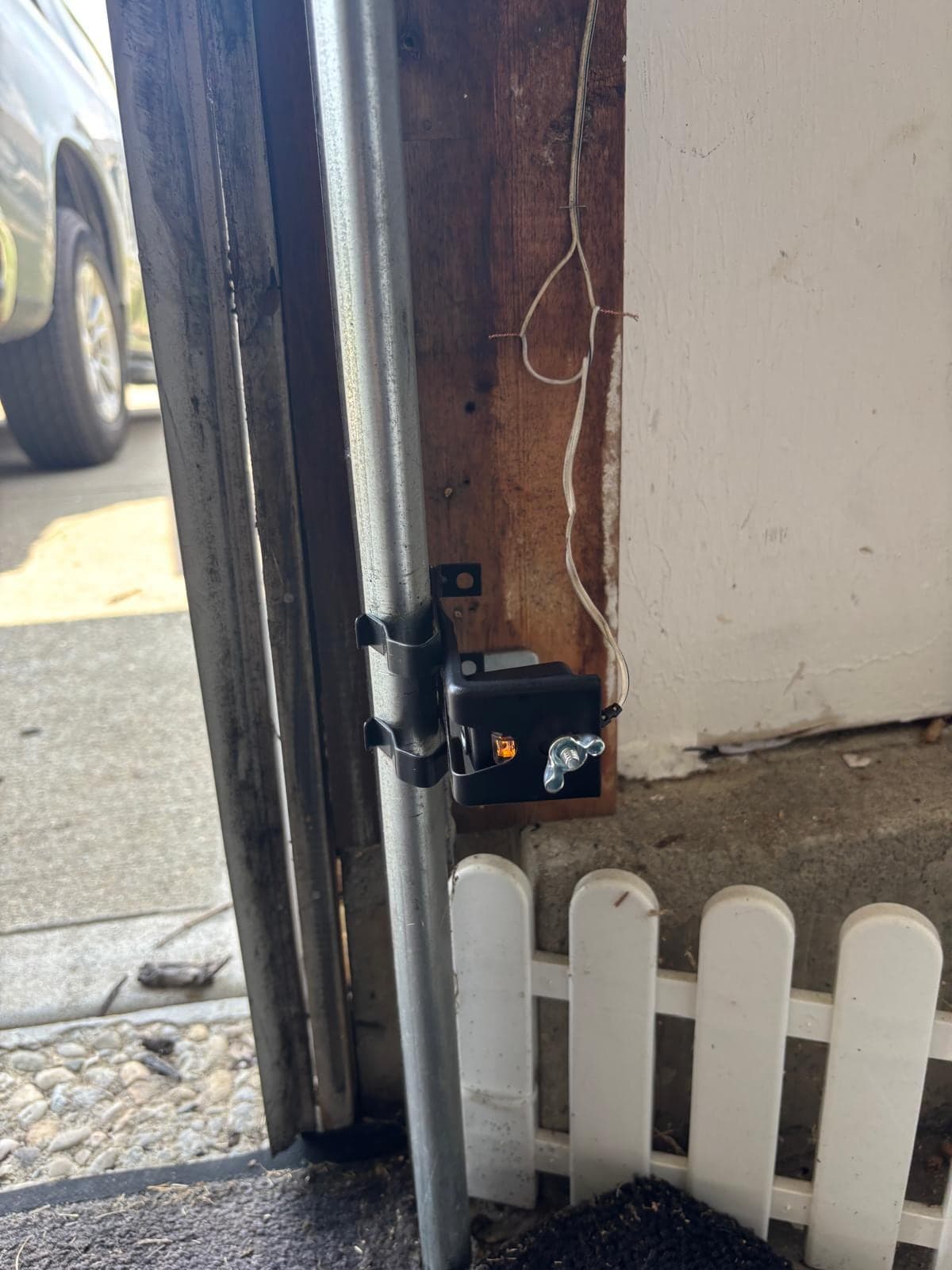
The second check is the sensors. Look at the two small units near the bottom of each track. One light should be steady. If either is off, flickering, or blinking, the door will refuse to close and will usually reverse and flash the opener light at you.
Free 21-point garage door safety inspection
We check all 21 points, hand you the written findings, and tell you what does not need fixing. There is no charge and no obligation to book work.
Signs to look for
How do I know this is the problem?
- The door closes partway then reverses and the light flashes
- The opener hums or runs but the door does not move
- A grinding noise from the motor unit with no movement
- The remote works close up but not from the driveway
- The wall button works but no remote does
- The opener runs, then the door reverses right at the floor
- The door opens by itself, or the opener runs with nobody pressing anything
- The keypad has stopped responding
What happens
What we actually do
- 1
Disconnect and test the door by hand
This separates a door problem from an opener problem in about thirty seconds and stops you paying for the wrong repair.
- 2
Check the safety system first
Photo-eye alignment, lens condition, wiring at the terminals, and a live reversal test with an obstruction. A flashing opener light is nearly always this.
- 3
Test force and travel limits
These drift over time and with temperature. Limits set too tight make the door reverse at the floor; set too loose and the door does not seal.
- 4
Inspect the drive
Chain tension, belt condition, trolley and carriage, and the plastic drive gear — a stripped gear is the classic cause of a motor that runs while the door stays still.
- 5
Repair, then re-run the safety test
The door must reverse on contact with a solid obstruction. We test it in front of you before we leave.
Cost
Repair or replace?
Broadly: sensors, remotes, logic boards, limit switches, trolleys and gear kits are worth repairing on any opener under about fifteen years old. What tips the balance to replacement is a chain-drive unit old enough to have no photo-eye sensors at all, a burned-out motor, or a discontinued board. Openers made before January 1, 1993 predate the federal entrapment-protection requirement and should be replaced rather than repaired.
Free 21-point garage door safety inspection
From our jobs
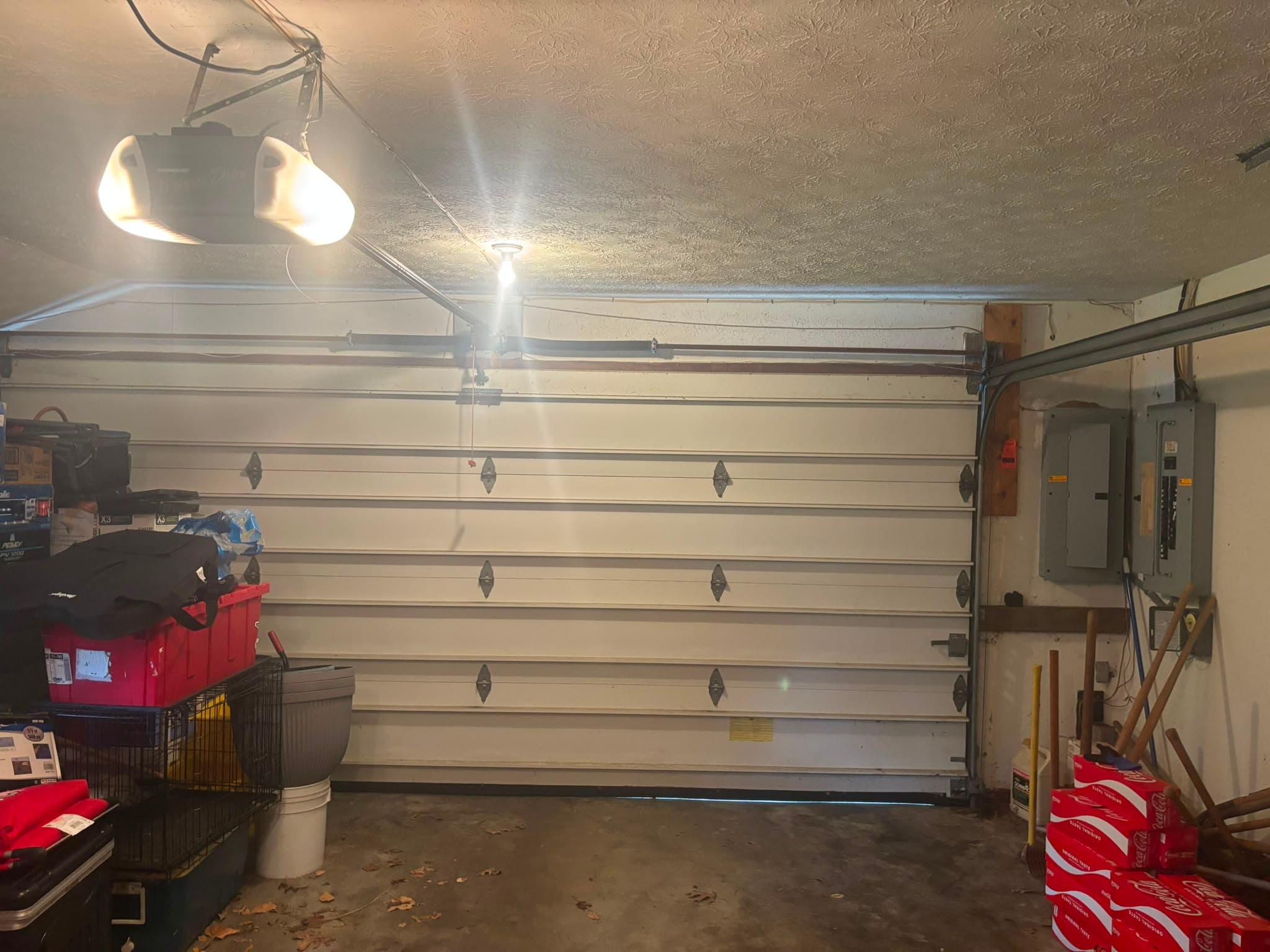
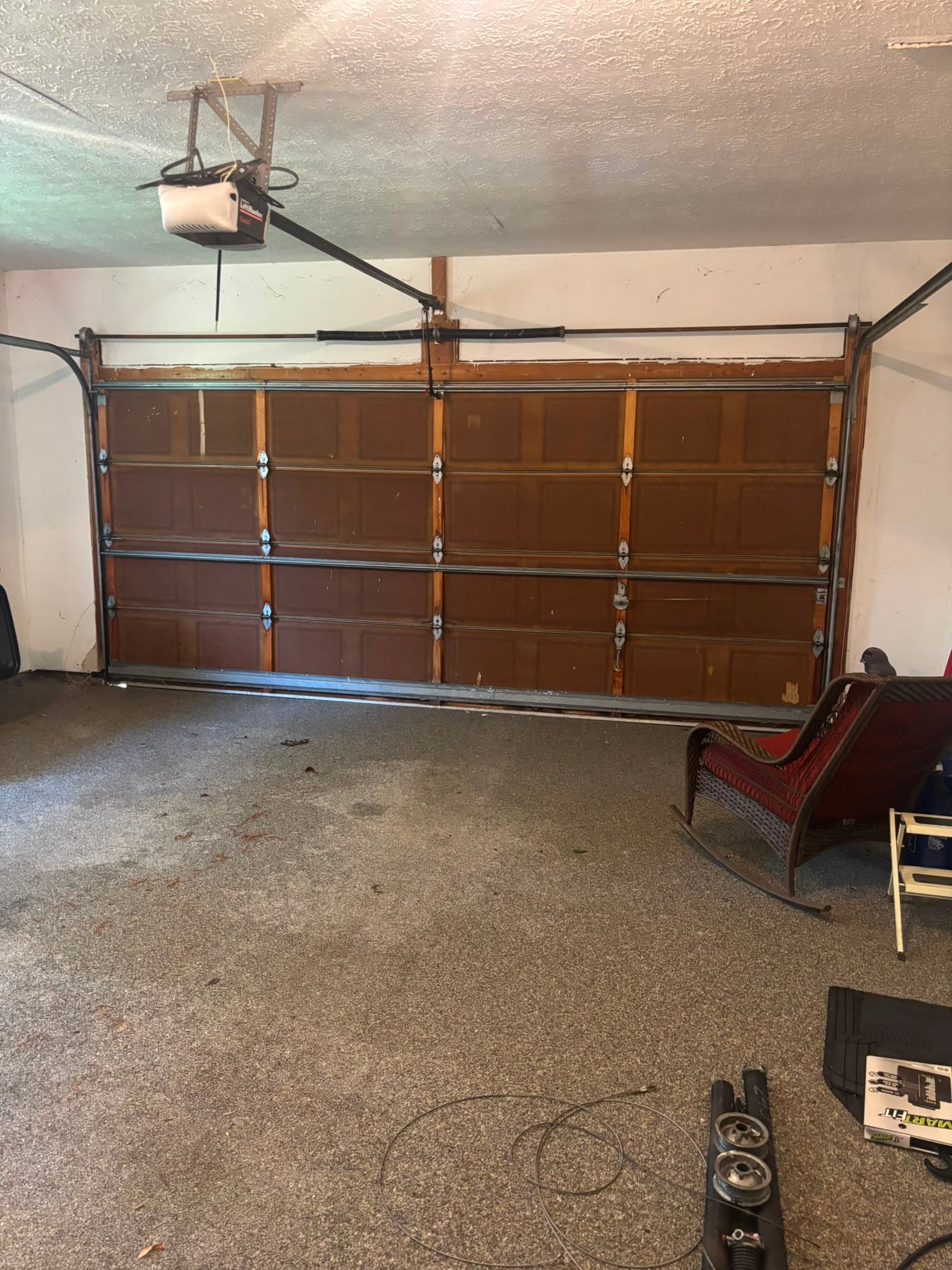
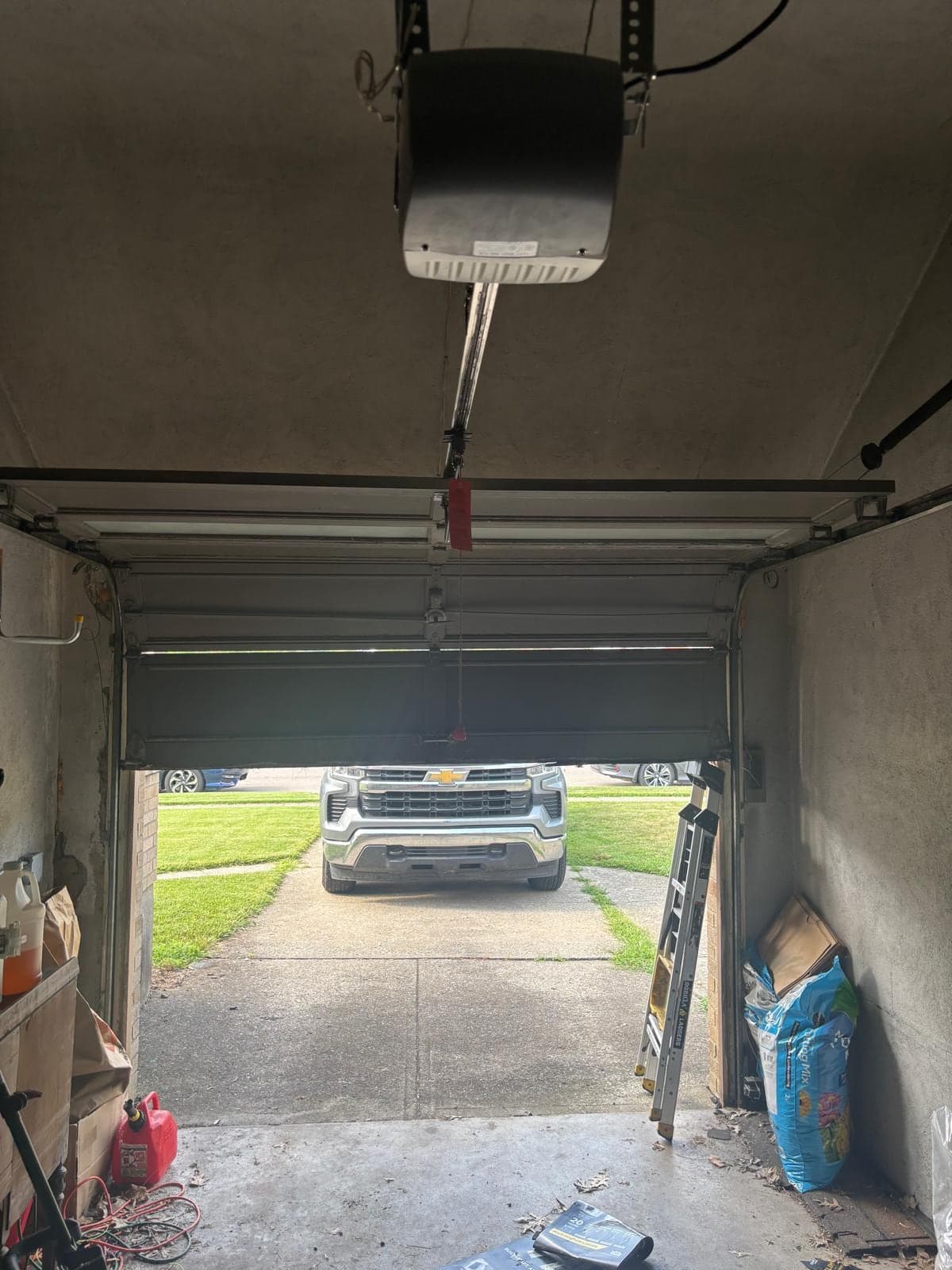
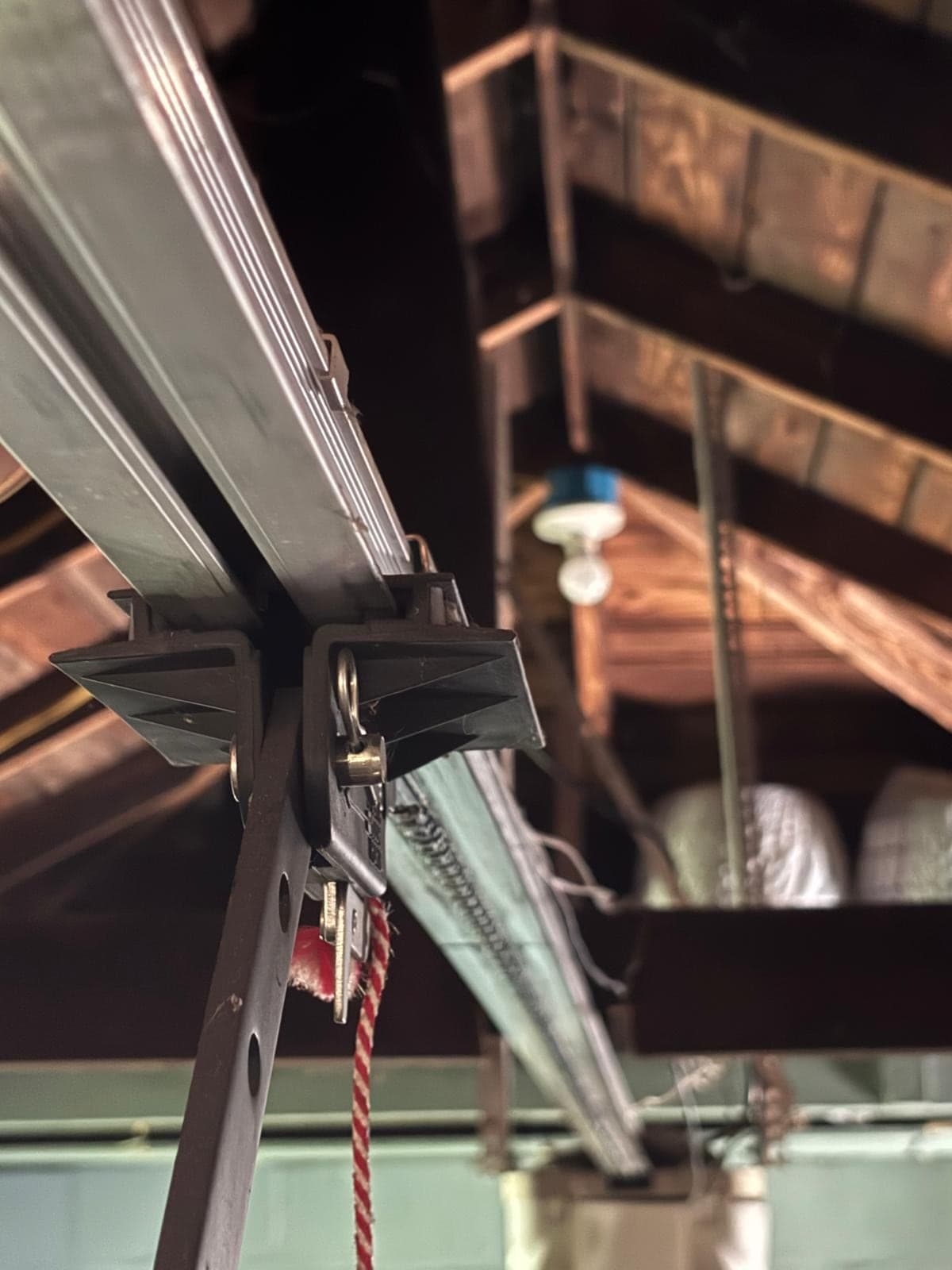
Opener repair photos from real visits
Phone-camera photos from PowerLift jobs around Greater Cincinnati and Northern Kentucky. Nothing staged, nothing borrowed.
Worth knowing
Why this matters
Since January 1, 1993, federal law and UL 325 have required residential garage door openers to include photo-eye sensors or equivalent entrapment protection. Those sensors are the reason a closing door stops when a child or pet crosses the threshold. If your opener has no sensors at the bottom of the tracks, it predates that requirement, and no repair makes it compliant.
Questions
Opener repair questions we get asked
Why does my garage door go down then come back up?
Two likely causes. If the opener light flashes as it reverses, the photo-eye sensors are misaligned, dirty, or have a broken wire — the opener thinks something is in the way. If there is no flashing, the down-force or down-limit setting is off, and the opener believes it has hit an obstruction when it has actually hit the floor.
How long does a garage door opener last?
Ten to fifteen years is typical for a residential opener in normal use. Belt drives tend to outlast chain drives in practice, mostly because they run under less vibration. What usually ends an opener's life is not the motor but the drive gear or the logic board.
My remote stopped working. Is the opener broken?
Usually not. Start with the battery, then try reprogramming the remote to the opener — most units have a learn button on the motor housing. If the wall button still works and no remote does, the receiver or antenna is the likely fault, and that is a repair, not a replacement.
Can you repair a Chamberlain or LiftMaster opener?
Yes, and they are the two most common units we see in Cincinnati garages. They share a parts platform, so gear kits, logic boards, trolleys and sensors are readily available for both. We also work on Genie, Craftsman, Linear, Marantec and Overhead Door units.
Is a belt drive worth the extra over a chain drive?
If the garage is attached to living space, yes — a belt drive is noticeably quieter, and that matters if there is a bedroom above or beside the garage, which is common in Cincinnati's newer subdivisions. On a detached garage, a chain drive is perfectly adequate and cheaper.
Should I upgrade to a smart opener?
It is worth it if you regularly wonder whether you left the door open, or if you take deliveries when nobody is home. Both Chamberlain and LiftMaster units with built-in Wi-Fi will tell you the door's state and let you close it from your phone. It is a convenience upgrade rather than a safety one.
Where
Opener repair across the Cincinnati metro
Related services
Need opener repair in Cincinnati?
We are open 24 hours across Greater Cincinnati and Northern Kentucky. Call (513) 276-2503 and the free 21-point safety inspection costs nothing.