Commercial Garage Door Repair in Cincinnati
We service commercial overhead doors, rolling steel doors and dock equipment across Greater Cincinnati and Northern Kentucky, 24 hours a day. Commercial doors fail differently from residential ones: they cycle dozens of times a day rather than four, so the wear is in the springs, bearings and drums long before the door itself shows anything, and a stuck bay door usually stops the work rather than just the car.
A commercial door is the same physics as a residential one, scaled up and cycled ten to fifty times as often. That changes the maintenance conversation entirely: a residential spring rated 10,000 cycles lasts seven years, and the same spring on a busy loading bay is finished inside a year.
Cincinnati has a dense industrial and logistics corridor — along I-75 through Sharonville and Evendale, out toward the CVG airport in Boone County, and across the river through Covington and Newport. Most of what we see commercially is high-cycle wear rather than dramatic failure.
Free 21-point garage door safety inspection
We check all 21 points, hand you the written findings, and tell you what does not need fixing. There is no charge and no obligation to book work.
Signs to look for
How do I know this is the problem?
- A bay door stuck open or closed and stopping work
- A rolling steel door that will not come down or jams partway
- Springs failing repeatedly on the same door
- An operator that trips its breaker or overheats
- Doors damaged by forklift or vehicle impact
- Doors that no longer seal, letting weather into the building
- Multiple doors on the site with no maintenance schedule
What happens
What we actually do
- 1
Get the bay working
On an emergency call the first objective is to restore operation or secure the opening, because a stopped bay is usually costing money by the hour.
- 2
Diagnose the cycle problem, not just the part
A door breaking springs annually does not need another standard spring; it needs high-cycle springs matched to its actual duty.
- 3
Repair or replace with the duty rating in mind
Bearings, drums, cables and operators specified for the cycles the door actually does, not for a residential duty cycle.
- 4
Set up a maintenance interval if the site wants one
Scheduled servicing on a multi-door site is considerably cheaper than emergency call-outs, because commercial failures are wear-driven and therefore predictable.
Cost
How commercial work is quoted
Per door and per site, because commercial variation is wide: sectional versus rolling steel, manual versus operator-driven, standard versus high-cycle springs, and whether the site needs a scheduled maintenance interval rather than call-outs. High-cycle springs cost more up front and are almost always cheaper over a year on a door that cycles heavily.
Free 21-point garage door safety inspection
From our jobs
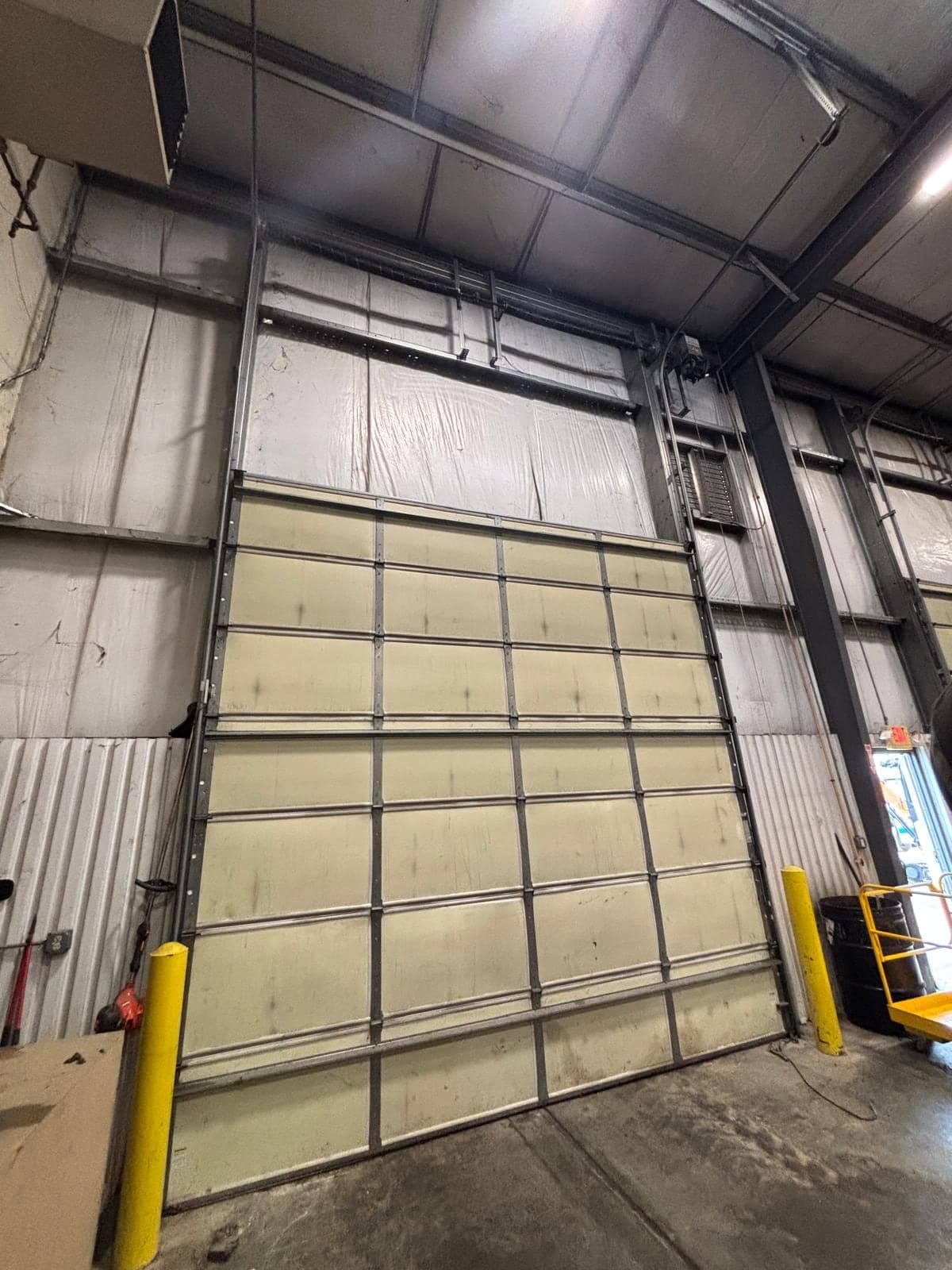
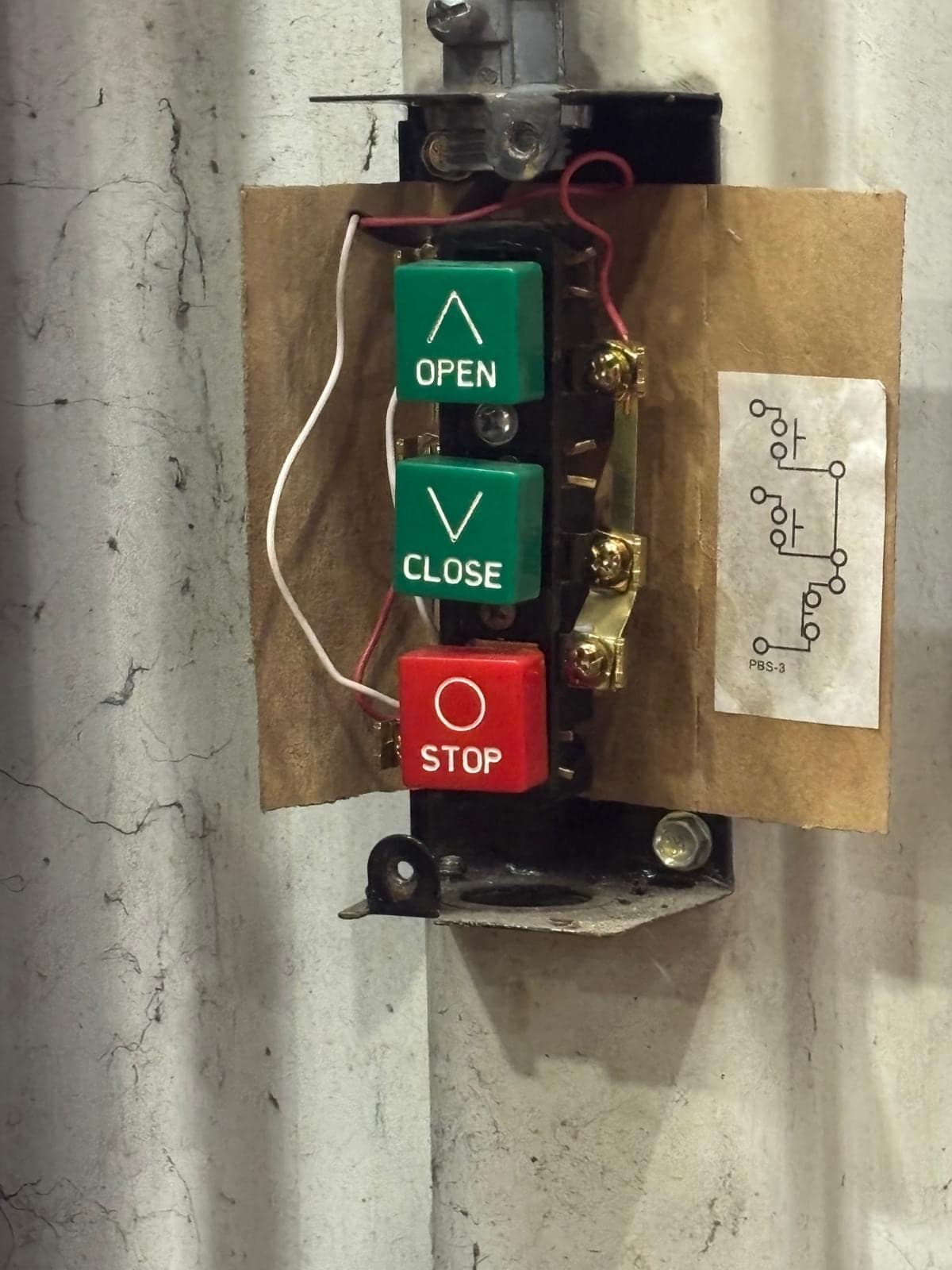
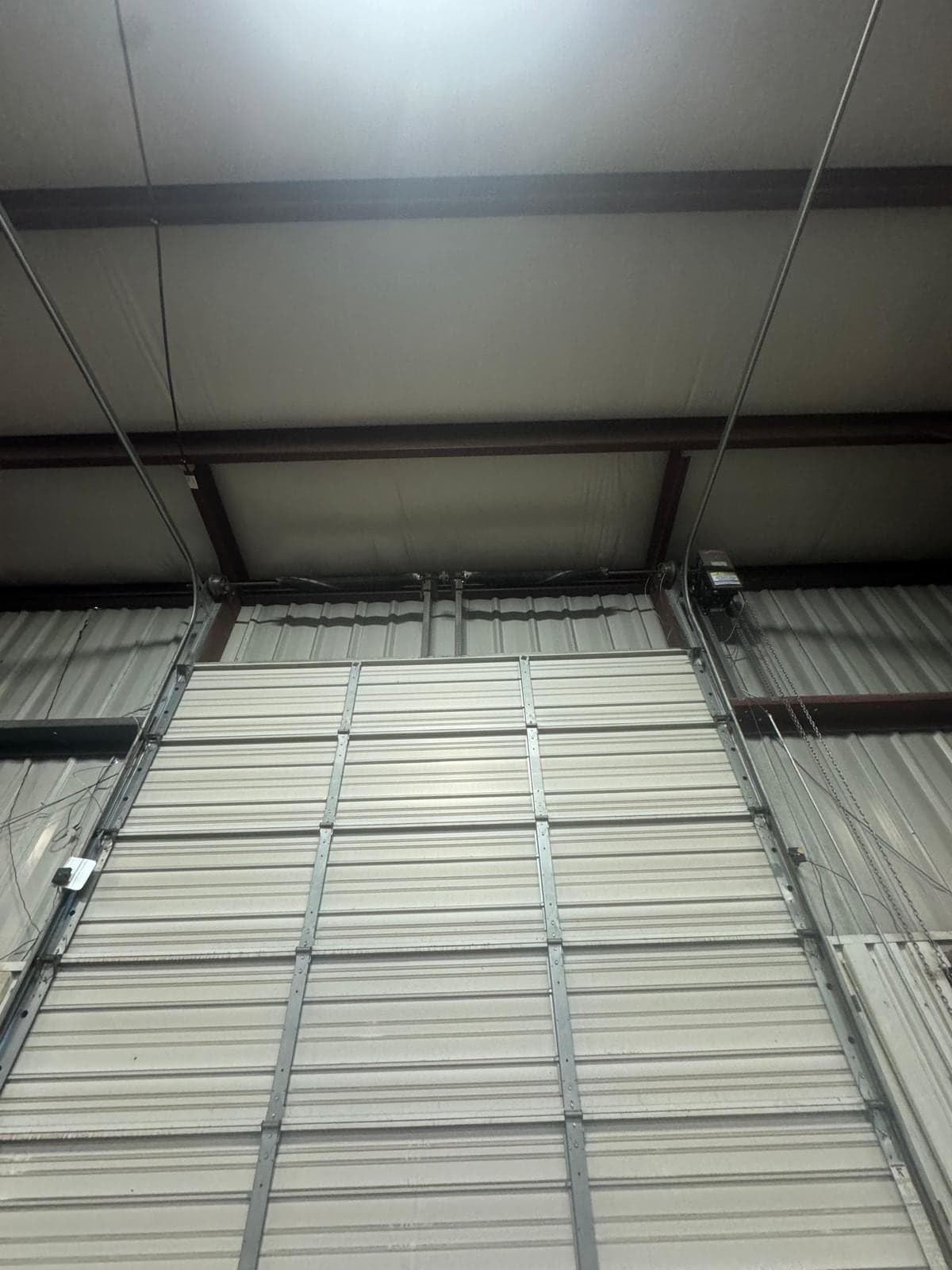
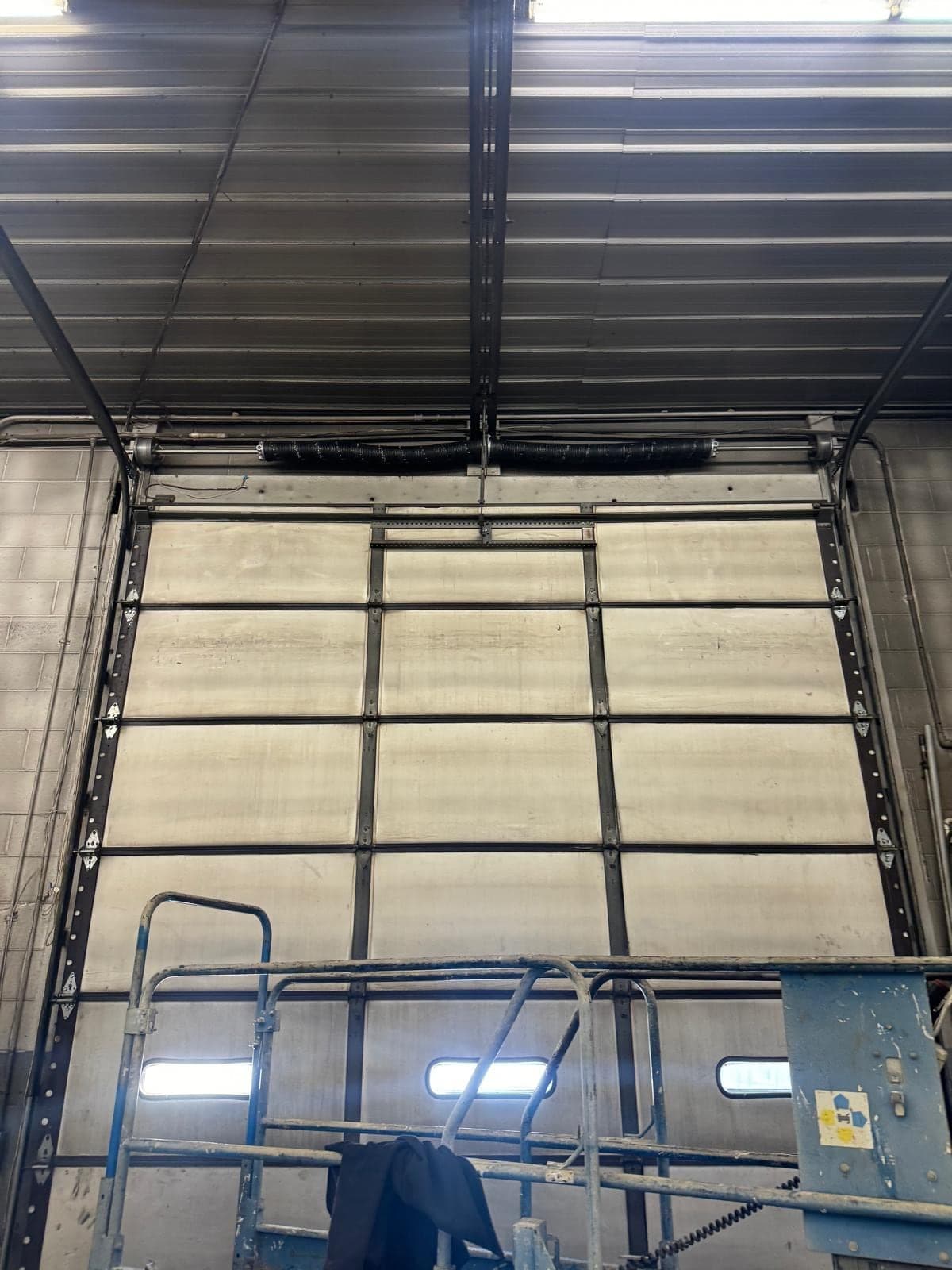
Commercial doors photos from real visits
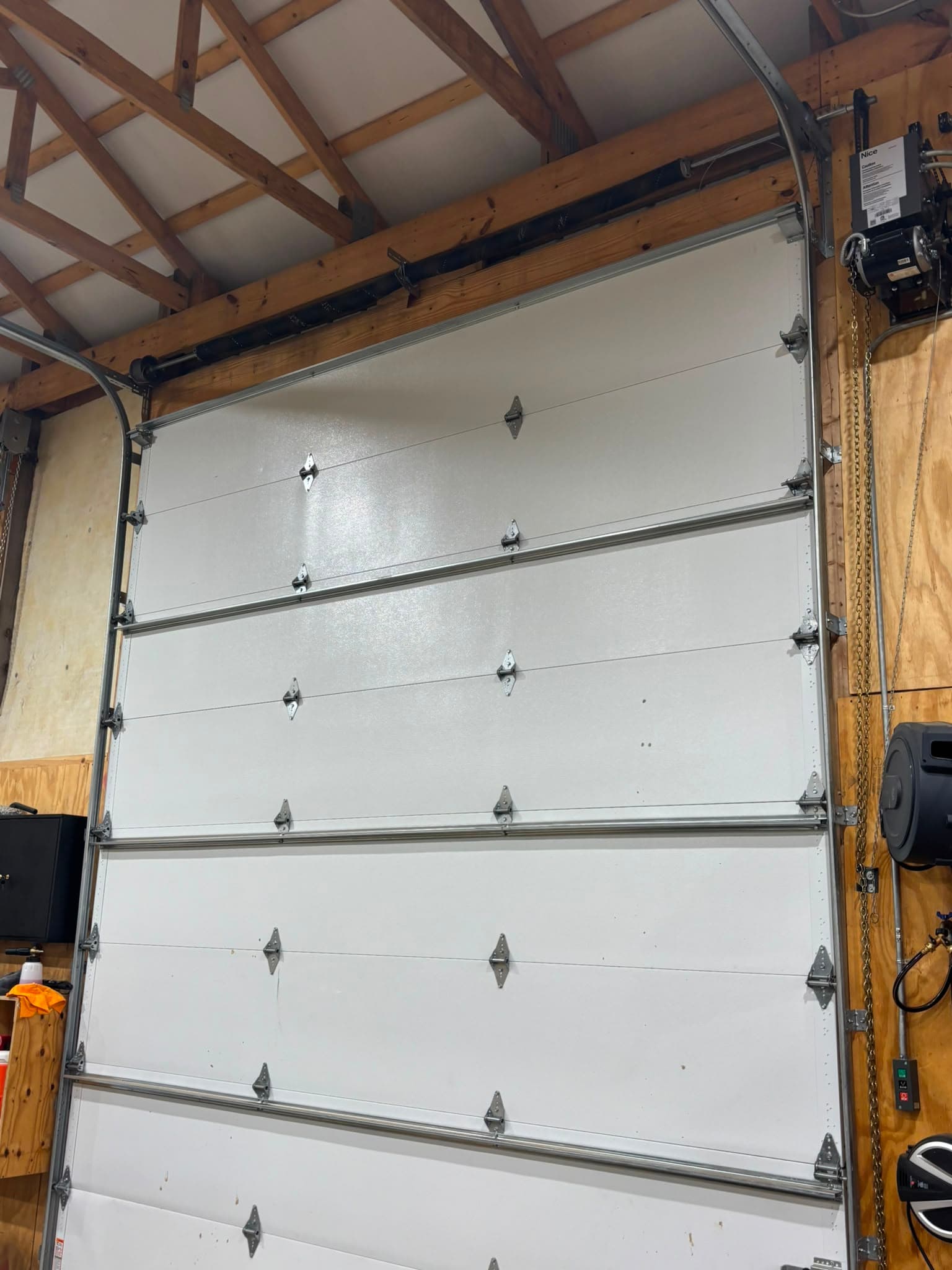
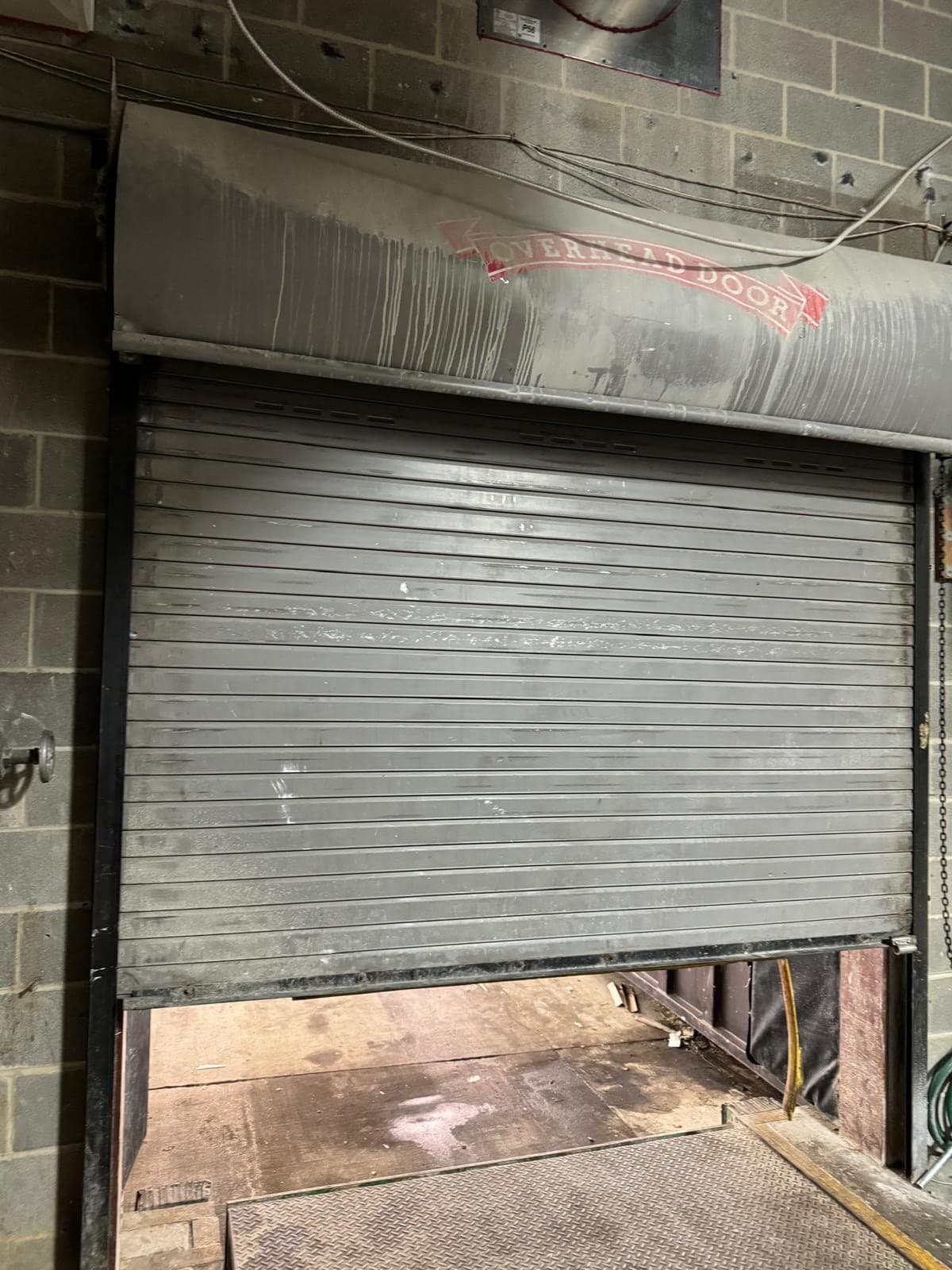
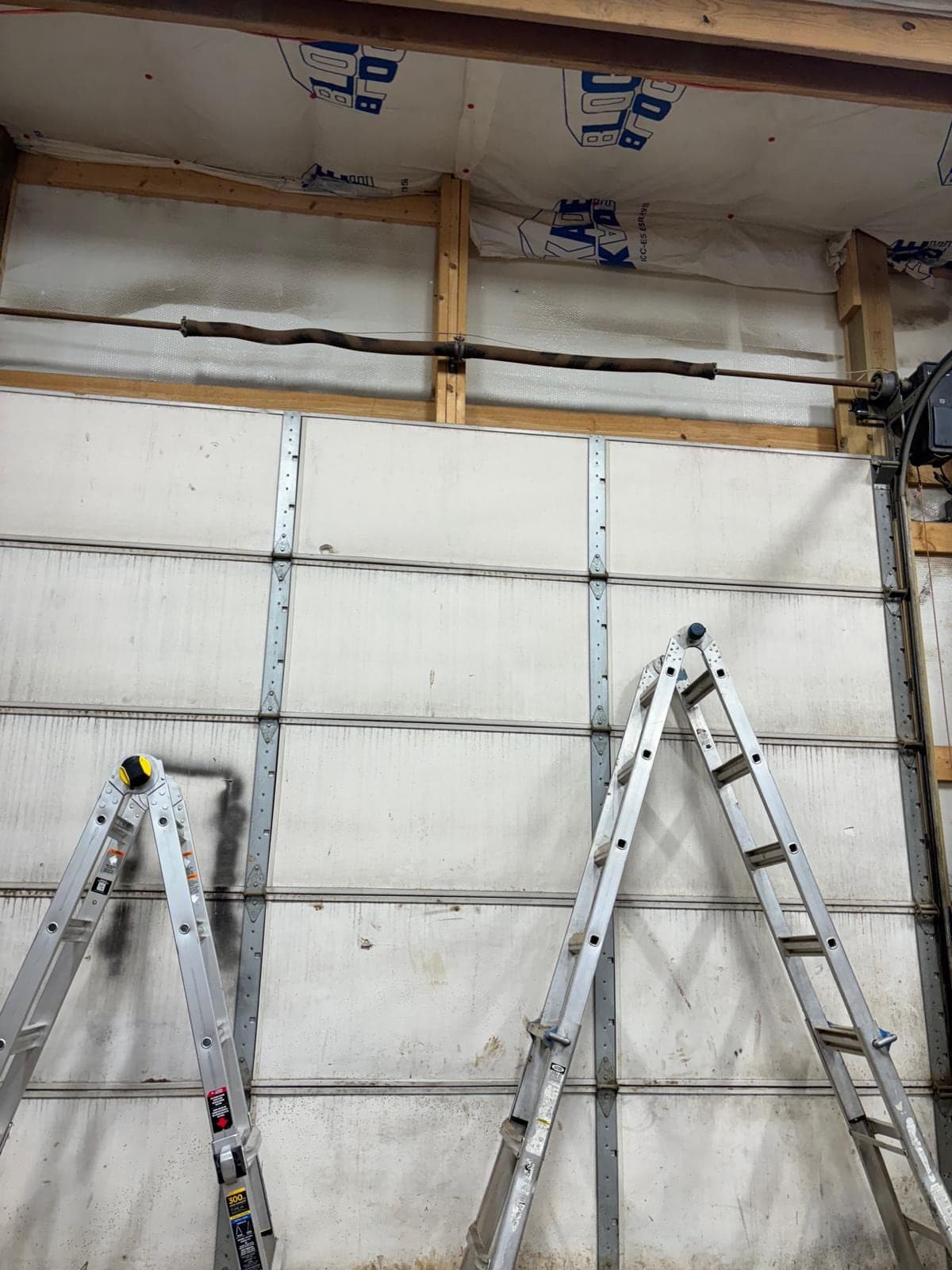
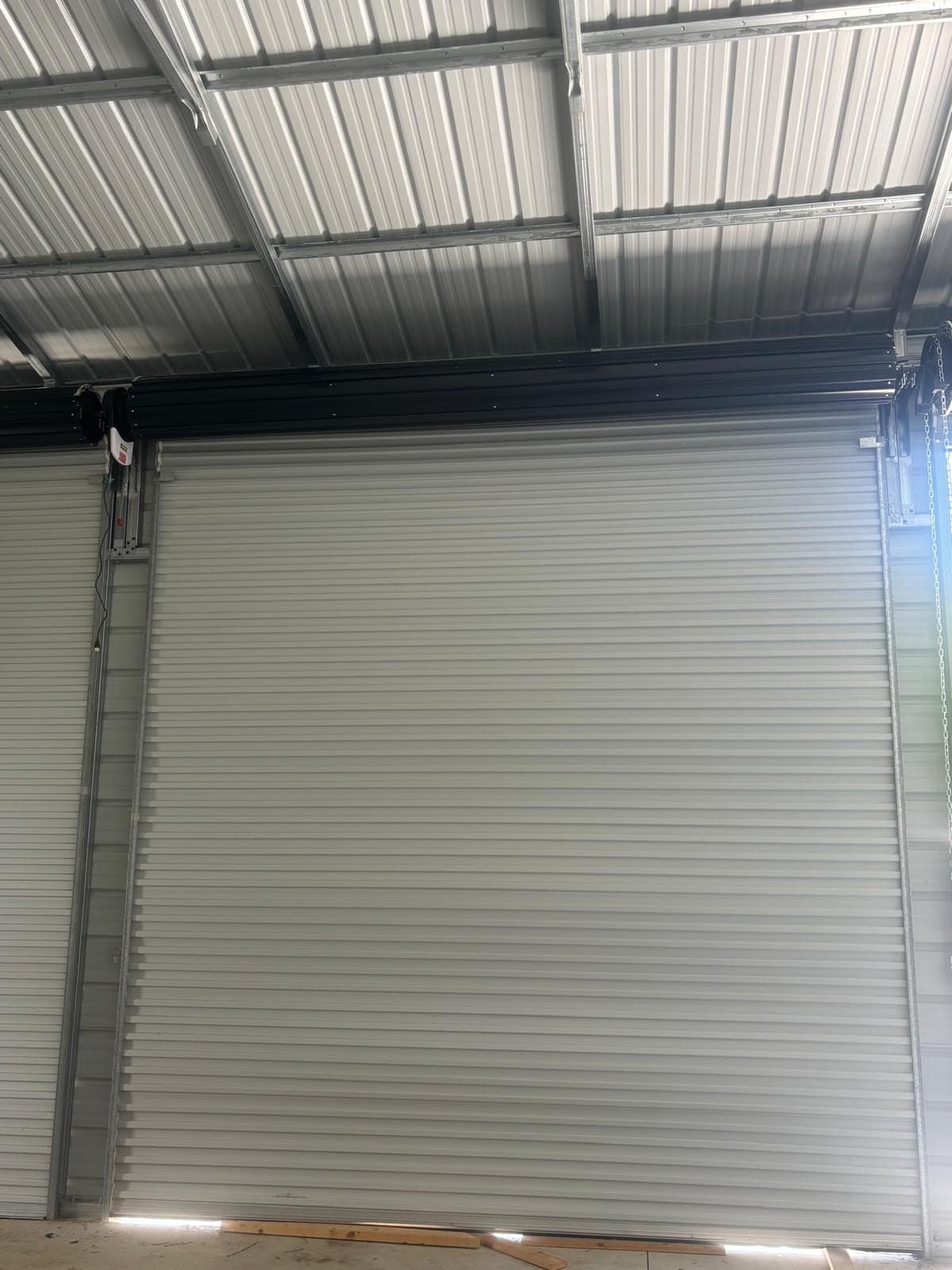
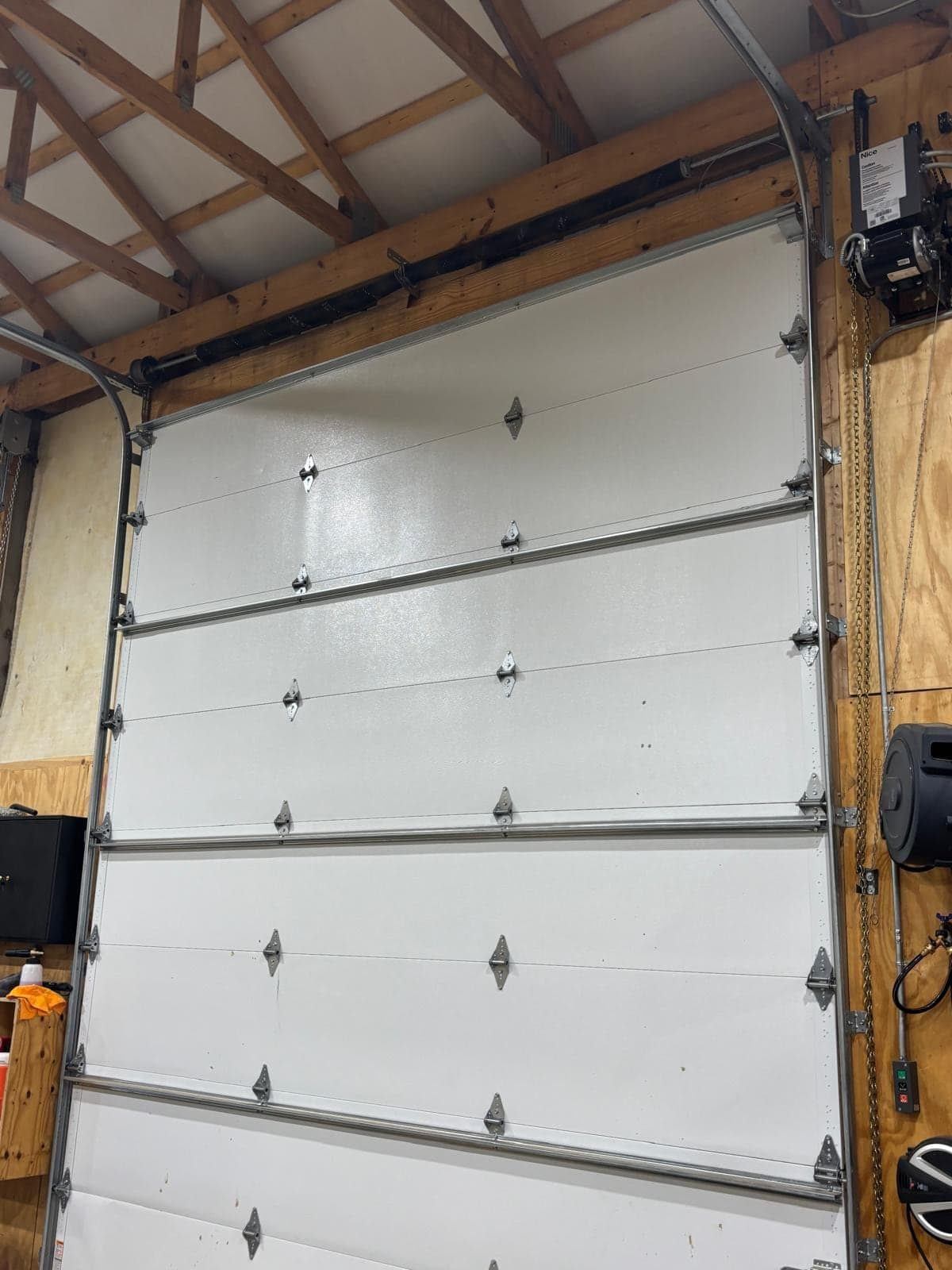
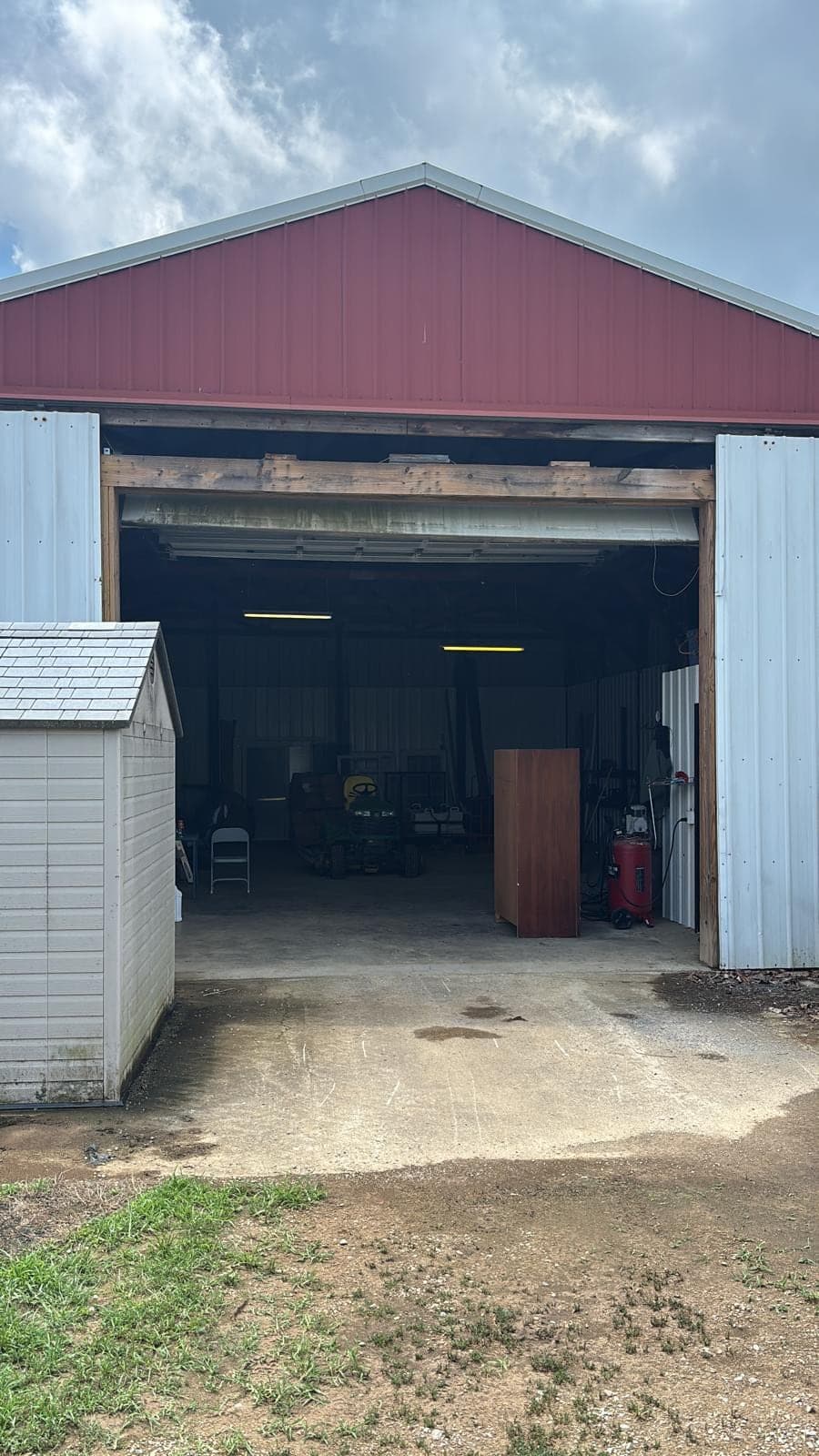
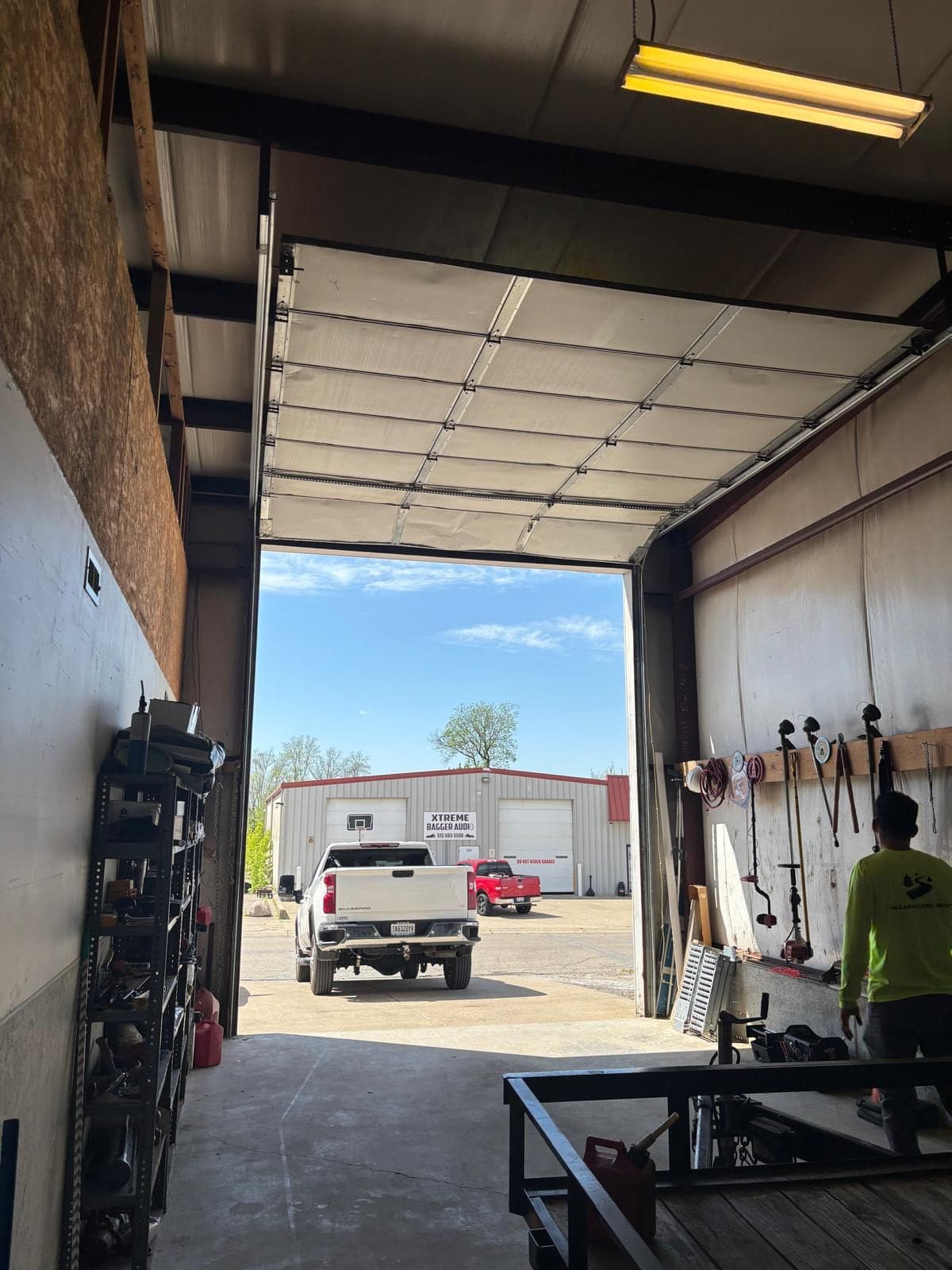
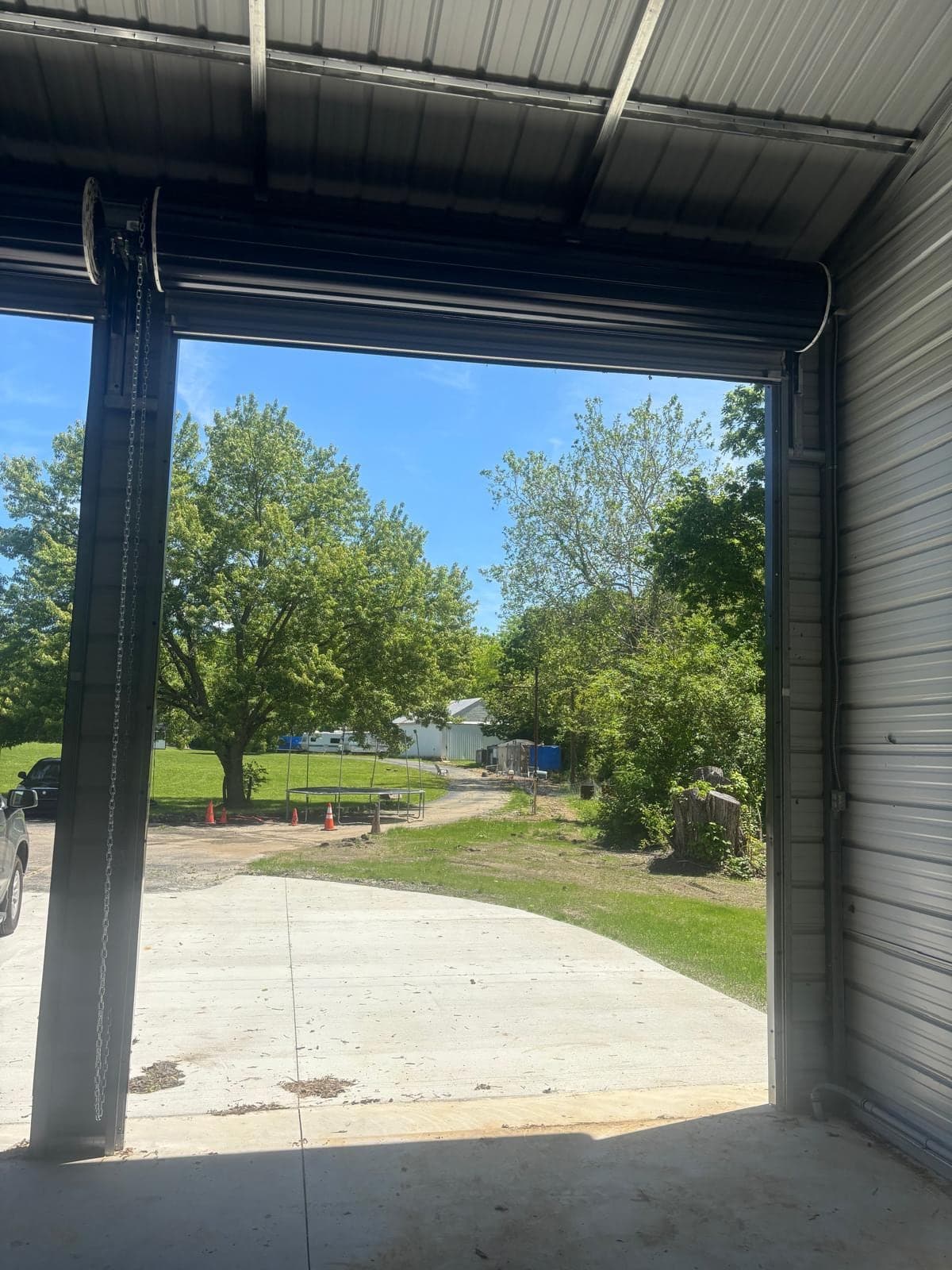
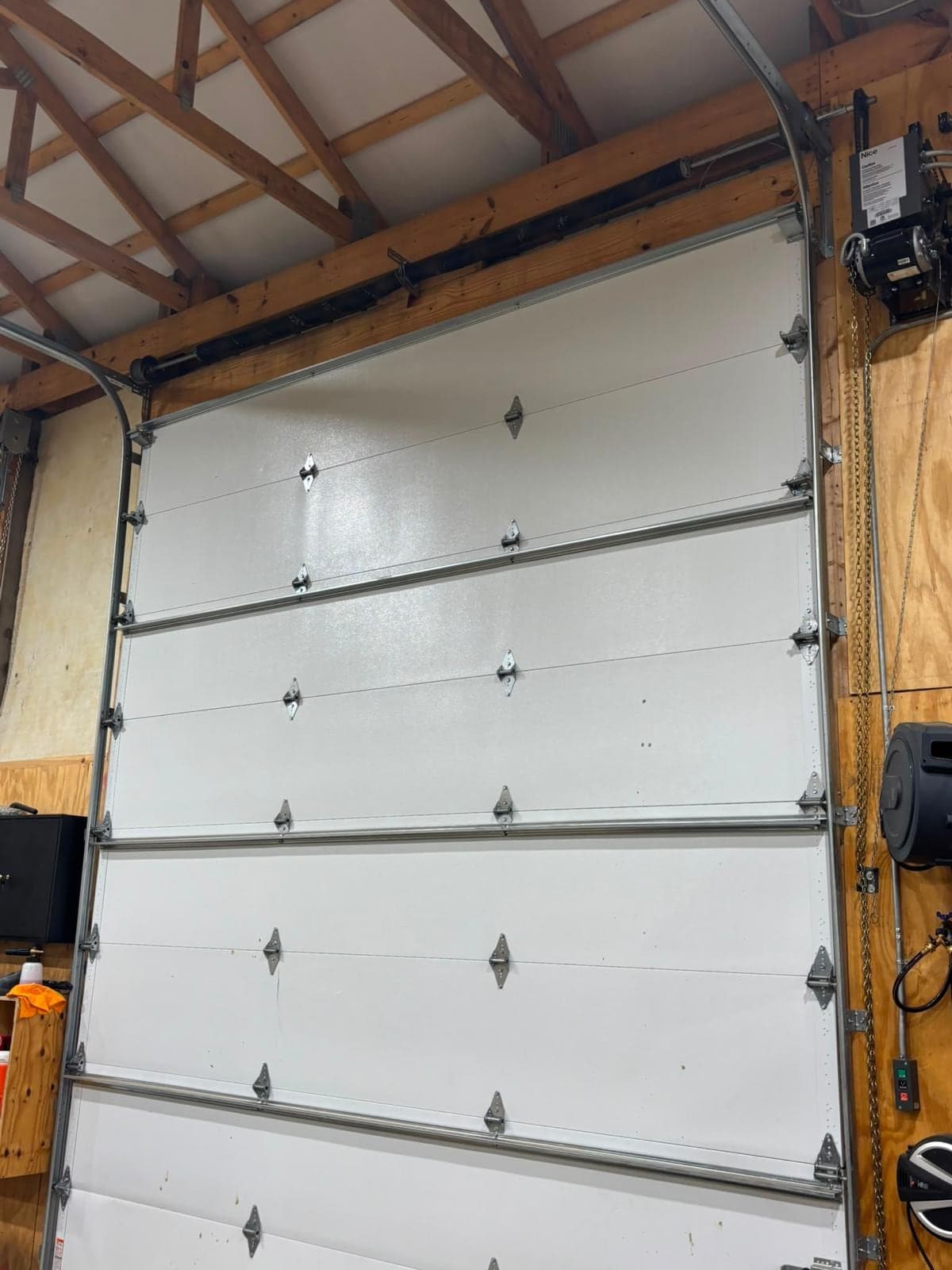
Phone-camera photos from PowerLift jobs around Greater Cincinnati and Northern Kentucky. Nothing staged, nothing borrowed.
Worth knowing
Why this matters
Commercial door failures are nearly always predictable. Cycle counts are known, spring ratings are known, and the arithmetic is straightforward. A site that tracks its cycles and replaces springs on schedule almost never has an emergency; a site that waits for the bang has one every year, usually at the worst possible time.
Questions
Commercial doors questions we get asked
Do you do emergency commercial call-outs?
Yes, 24 hours a day. A stuck bay door usually means work has stopped, so commercial emergencies are prioritised the same way as a residential door with a car trapped inside.
What is the difference between a sectional and a rolling steel door?
A sectional door is made of hinged horizontal panels that run up into horizontal tracks under the ceiling — the same principle as a residential door, built heavier. A rolling steel door is a continuous curtain of interlocking slats that coils around a barrel above the opening. Rolling doors suit openings with no ceiling space to give up, and they are the standard on warehouse and storage frontages.
Why do our springs keep breaking?
Almost always because standard-cycle springs are fitted to a door doing commercial cycle counts. A 10,000-cycle spring on a door that opens forty times a day is finished in well under a year. High-cycle springs rated 50,000 or 100,000 cycles cost more up front and stop the recurring failure.
Can you service multiple doors at one site?
Yes, and on a multi-door site a scheduled maintenance interval is generally the cheaper approach. Commercial failures are wear-driven and predictable, which means they can be caught during planned visits instead of shutting a bay unexpectedly.
Where
Commercial doors across the Cincinnati metro
Need commercial doors in Cincinnati?
We are open 24 hours across Greater Cincinnati and Northern Kentucky. Call (513) 276-2503 and the free 21-point safety inspection costs nothing.