
Guide
Why Cincinnati’s Hills Are Hard on Garage Door Tracks
Published November 4, 2026
A large share of Cincinnati driveways run downhill into the garage, and that one fact explains most of the off-track and binding doors we see. Water and grit wash toward the door instead of away from it, debris packs into the bottom track, the door rides up over it on one side and a roller leaves the channel. On hillside lots the garage slab itself can settle a few degrees, so the track is no longer plumb and the door catches at the same corner every time. Neither problem is fixed by pushing the door back into the rails. Disconnect the opener, leave the door where it is, and have the cause found before anything is moved.
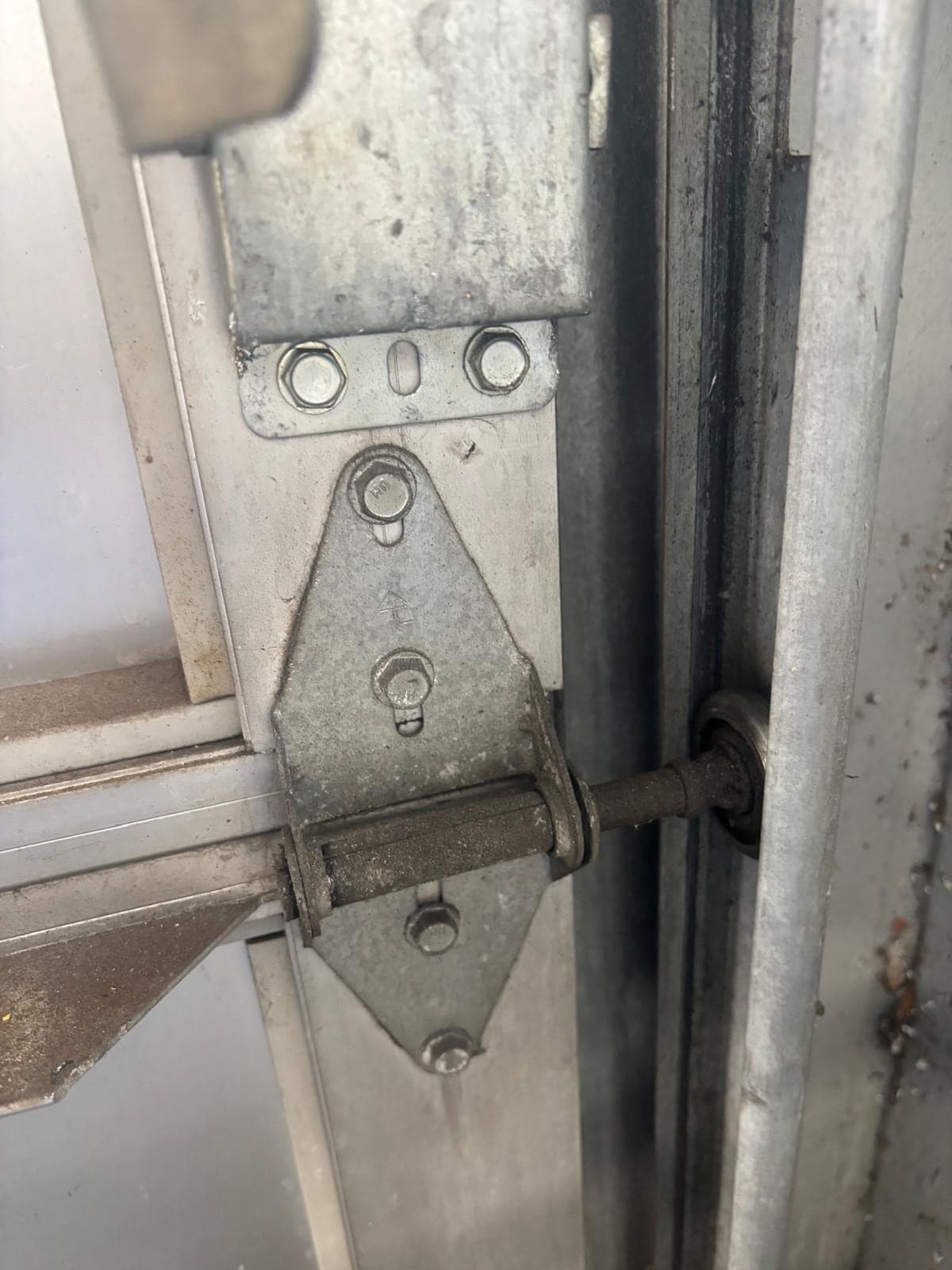
What a downhill driveway does to a door
Cincinnati is built on hills, and the house that sits above its own driveway is the normal case here rather than the exception. Every rain sends water down that slope with whatever is on it: leaf litter, road grit, and in winter the salt brine that comes off the tires. On a flat lot that mix drains away from the garage. On a downhill lot it arrives at the lowest point on the property, which is the threshold of the garage door, and from there it works into the bottom track.
The bottom track is a shallow steel channel with a roller in it, and it does not take much to lift the roller out. Grit builds up on one side more than the other, the door rides up over the pile on that side, and the roller pops out of the channel. The door is now carrying its weight unevenly, which is the start of a bent track, a torn hinge or a creased bottom section if it keeps running. This is the most common off-track call we take, and it is undramatic right up to the moment it is not.
The same water does two slower things. On older detached garages with wooden jambs it rots the bottom of the frame, so the track brackets that are screwed into that wood lose their grip and the track drifts out of line. And in winter it freezes against the bottom seal: the threshold is the coldest, wettest spot on the property, so the bottom section of a steel door rusts from the inside at the exact point where the bottom brackets and lift cables attach. January lows here average in the mid-20s and the temperature crosses freezing again and again rather than staying cold, so the ice at the threshold forms and melts dozens of times a season.
Hillside garages: racked openings and the door that binds every spring
A garage dug into a slope, or tucked under the house at the bottom of a steep drive, has a second problem that has nothing to do with debris. The slab and the walls were poured level, but hillside ground moves. Across Northern Kentucky officials describe hillside slides as common because the subsoil is clay rather than rock, and the Ohio side of the river sits on the same hills. A slab that has settled a few degrees on one side takes the vertical track with it. The track is now out of plumb, the gap between the track and the door edge is wider at the top than at the bottom, and the door catches at one corner.
The tell is a door that binds at the same point every time, frees up in summer and binds again in spring. It can be adjusted, and we adjust it, but if the building is still moving the adjustment does not hold. We check the vertical track for plumb and the floor for level before touching anything else on a hillside garage, because a new spring or a new opener cannot fix a building. When the opening really is racked, the honest options are to true the track to the opening as it stands, or to reframe the opening, and we will tell you which case you are in rather than keep selling the same tune-up.
Tucked-under garages add a third constraint: headroom. The space above the opening is often less than a foot, so a standard torsion assembly does not fit above the door and a standard seven-foot door does not fit in the hole. The right answer is low-headroom track, a rear-mounted torsion spring, or a door made to the opening’s real height. The wrong answer, which we see regularly, is a standard door trimmed at the bottom and hung on extension springs with no safety cables through them.
Off the track: why it happens and why you should not push it back
A door leaves its track for three reasons: something struck it, a roller or a hinge failed, or debris in the bottom track forced it out of line. On a sloped driveway the debris version leads. A bumper tap at the bottom section is enough to bend the track or the bottom fixture so the door leaves the rails on the next cycle. And a worn hinge holds its roller at an angle, which is why new rollers fitted to old hinges wear out early and eventually climb out of the channel.
Whatever the cause, the door is now unsupported on one side, and its weight is being held by whatever is left. That is why levering it back by hand is one of the more common ways people get hurt on a garage door, and why it tends to bend the track further and turn a cheap fix into a track replacement. Pull the red release cord so the opener cannot run, leave the door where it is, and keep the car out from under it.
When we arrive the sequence is fixed. The door is clamped and braced before anyone moves it. Then the cause is found, not just the symptom: debris, a failed roller, a bent track, a broken hinge, or a cable that has come off its drum. Mildly bent track can be trued; kinked track is replaced, because a crimp in the channel will keep catching a roller no matter how well the rest is aligned. Then rollers back in the channel, vertical and horizontal track aligned and plumb, and a full balance test before the opener is reconnected. A door that came off under power may have creased a section, and a single creased section can usually be replaced on its own rather than replacing the whole door.
Keeping a hillside door on its rails
Keep the bottom track clear, particularly after a storm or a thaw, and especially if the driveway slopes toward the garage. A broom and two minutes a month prevents most of the off-track calls we get. Watch the threshold in winter: a line of ice against the bottom seal means water is pooling there, and a new bottom seal or a threshold strip is a far cheaper fix than a rusted bottom section.
Replace rollers before they seize. Nylon rollers with sealed bearings last considerably longer than the bare steel rollers that builders fit as standard, and a roller that will not spin freely by hand is dragging rather than rolling and wearing the track as it goes. On the inspection every roller is turned by hand, every hinge is checked for elongated holes and cracks, the vertical track is checked for plumb with a consistent gap to the door edge top to bottom, the horizontal track for level and support, and the bottom track for condition and debris. Sagging horizontal track is a common reason a door binds near the top, and it is a five-minute fix when it is caught early.
If your garage is at the bottom of a slope, ask for the track and the floor to be checked once a year, not just when something fails. The 21-point safety inspection covers all of this and it is free; you get the written findings whether or not you book anything, and on a hillside lot the most useful line in that report is often the one about the track, not the spring.
Warning signs before a full break
- The door binds or scrapes at the same point in its travel every time
- A visible gap between the track and the door edge that is wider at the top than at the bottom
- Grit, leaves or standing water in the bottom track after rain
- A roller lying on the floor, or a door visibly out of the metal channel on one side
- A line of rust or ice along the bottom section where it meets the floor
- A door that frees up in summer and binds again every spring
Frequently asked
Can I push the door back onto the track myself?
We would not. While the rollers are out, the door is unsupported on one side and heavy, and levering at it tends to bend the track further. It is also usually a symptom rather than the problem, so putting it back without finding out why it came off means it happens again. Disconnect the opener and leave it where it is.
Why does this happen more on sloped driveways?
Because water carries grit toward the door rather than away from it. The debris collects in the bottom track, the door rides up over it on one side, and the roller leaves the channel. It is the most common off-track cause we see in Cincinnati.
Does a steep driveway need a different kind of door?
Not usually a different door, but different attention: a good bottom seal or threshold strip, nylon sealed-bearing rollers, and a track check once a year. Tucked-under garages with very little headroom do need low-headroom track or a rear-mounted spring rather than a standard assembly.
The door binds at one corner. Will a new door fix it?
Only if the opening is square. If the slab has settled and the track is out of plumb, a new door will bind in exactly the same place. We check the track for plumb and the floor for level first; the fix is to true the track to the opening, or in the worst cases to reframe it, and only then does a new door make sense.
How often should the track be checked?
Once a year on a sloped or hillside lot, and after any impact. Track alignment, roller condition and debris in the bottom channel are all part of the free 21-point inspection, so the check costs nothing beyond the visit.
Related service
If this is happening to your door right now
Get the free inspection before it becomes an emergency
The 21-point inspection checks spring condition and remaining life along with the hardware around it, and you get the written findings — no charge, no obligation. We're open 24 hours across Greater Cincinnati and Northern Kentucky.
Written by the PowerLift Garage Door team, based on repairs made across Greater Cincinnati and Northern Kentucky. About us